

An Innovative Tool for Efficient Repair and Life Extension of Oilfield Equipment
In the high-risk, high-investment oil and gas industry, equipment operates under extremely harsh conditions. Facing the frequent wear and corrosion of metal components, conventional surface repair technologies often prove insufficient. This article will delve into how Laser Cladding Technology, as an advanced surface engineering method, breaks through the limitations of traditional techniques. We will explore its decisive role in the repair and reinforcement of critical equipment like drill pipes, sucker rods, and pipelines, thereby helping oilfield enterprises achieve the dual goals of cost reduction, efficiency improvement, and safe production.

Oilfield Environment Challenges: The Bottleneck of Conventional Repair Technology
Oilfield production operations present some of the most challenging working conditions in the industrial sector. Metal components constantly operate under heavy load, high pressure, enduring severe mechanical friction, wear, and complex chemical corrosion. This relentless exposure leads to the premature failure of expensive parts, resulting in substantial material costs and costly production downtime due to frequent replacement and inspection needs. A significant technical barrier arises because the wear gaps in many critical metal components often reach near-millimeter dimensions. Facing damage of this depth, conventional surface treatments like thermal spraying or electroplating are inherently limited. These traditional methods produce thin coating layers with insufficient bonding strength, making it impossible to effectively fill or structurally repair large, deep wear surfaces. This technical shortcoming forces the premature scrapping of salvageable equipment, severely hindering resource utilization. Consequently, the industry urgently requires a robust technology capable of deep, high-strength repair to maximize asset life, a need that is precisely met by Laser Cladding Technology.
Reinforcing Drill Pipes: Combating Extreme Downhole Wear
The oil drill pipe is the indispensable core tool in drilling operations, acting as the crucial artery connecting surface machinery to the downhole drill bit. Its environment is exceptionally hostile: navigating complex geological layers thousands of meters down, enduring enormous torque, impact forces, and constant resistance from mud scouring and acidic gas corrosion. Under this high-intensity physical and chemical assault, drill pipe surfaces are highly susceptible to fatigue cracks and localized wear. These defects not only drastically shorten the pipe's service life but also escalate the risk of catastrophic failures like drill string collapse, directly compromising the safety and efficiency of the entire drilling operation. Laser Cladding Technology provides a strategic solution for drill pipe surface reinforcement. By utilizing a high-energy laser beam, a special alloy coating-characterized by extremely high hardness, superior wear resistance, and excellent heat and corrosion resistance-is fused onto the wear-prone areas. This protective "body armor" significantly enhances the drill pipe's surface integrity. This advanced treatment demonstrably boosts mechanical wear resistance, effectively seals existing micro-cracks, and thereby extends the drill pipe's operational lifespan. Ultimately, this leads to fewer maintenance interruptions and substantial savings in operating costs by preventing downtime.


Sucker Rod Repair: Conquering Corrosion and Fatigue Fracture
As the backbone of the oil production system, the sucker rod performs a critical, demanding task: raising crude oil to the surface via continuous reciprocating motion. Its environment is challenging; it is constantly immersed in a corrosive crude oil mixture containing substances like hydrogen sulfide and high-salinity water, leading to severe chemical degradation. Simultaneously, the sustained friction against the inner tubing wall, combined with continuous high-stress movement, causes wear grooves and induces severe fatigue cracks. Sucker rod failure can halt crude oil extraction, necessitating complex retrieval operations that severely impact production targets. Laser Cladding Technology offers an optimal life-extension solution. It involves fusing a dense, high-hardness, and high-toughness specialty alloy coating onto the rod surface. Crucially, this metallurgical bond fundamentally changes the rod's surface properties. The dense layer effectively isolates the corrosive media from the substrate and provides superior resistance to frictional loss against the tubing. By repairing existing surface defects and enhancing its anti-fatigue performance, treated sucker rods significantly extend their service duration, guaranteeing stable and continuous operation of the lifting system and improving the overall economic efficiency of oil extraction.
Oil Pipeline Protection: Constructing Internal and External Corrosion-Proof Shields
Oil pipelines are the vital arteries of the petroleum industry, making their safe and continuous operation critical to energy security. However, these pipelines face severe, dual corrosion: internally from crude oil impurities, sediment, and associated water, causing wall thinning; and externally from hostile soil conditions. Corrosion often leads to perforation and leaks, resulting in significant economic losses and serious environmental hazards. Therefore, reinforcing pipeline integrity against corrosion and repairing existing damage is a top priority. Laser Cladding Technology provides a comprehensive and superior solution. Unlike conventional external coatings, laser cladding can fuse a dense, non-porous alloy coating with a robust metallurgical bond onto *both* the internal and external walls. This coating acts as an impenetrable shield, offering exceptional resistance to aggressive corrosive agents. For pipelines that have already experienced localized wall thinning or minor surface damage, laser cladding enables cost-effective, *in situ* restoration of the original wall thickness and structural strength. By utilizing this advanced method, pipeline durability and safety are dramatically improved, reducing the probability of catastrophic leakage and securing reliable oil and gas transportation.

Laser equipment components

Fiber Laser Machine

Laser Cladding Head
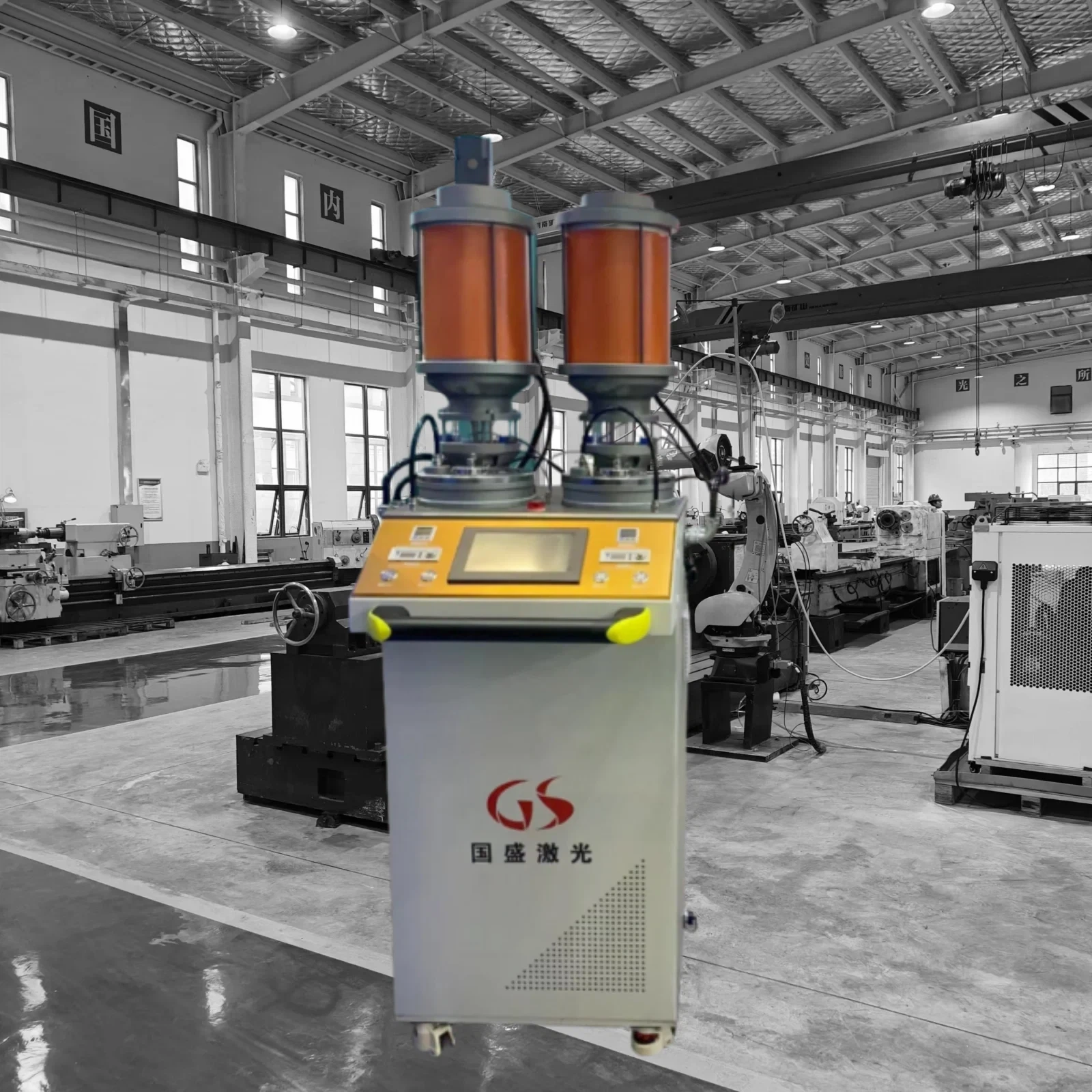
Powder Feeder

Laser Hardening Head
The Inevitable Choice for Cost Reduction and Efficiency
In conclusion, Laser Cladding Technology has established itself as a pivotal innovation in oilfield equipment maintenance. Its core advantages-producing dense coatings with high metallurgical strength, minimal thermal distortion, and precision repair capabilities-directly address the severe technical challenges faced by the industry. By effectively restoring millimeter-level wear gaps and significantly enhancing equipment performance against corrosion and wear, laser cladding offers unparalleled life extension for critical assets across the entire production chain: from drilling and extraction to transportation. For modern oilfield enterprises, adopting this technology transcends a mere maintenance technique; it is a critical strategic imperative for optimizing operations. It delivers significant cost reduction by minimizing new material consumption and eliminating expensive production downtime. Furthermore, it inherently promotes safety by preventing equipment failure. As this technology matures and its integration expands, laser cladding will undoubtedly drive oilfield equipment management toward a more sustainable, efficient, and intelligent future.