

The Evolution of Surface Engineering
Surface enhancement is critical for extending the service life and performance of high-value components in sectors like aerospace, energy, and heavy machinery. Traditionally, methods like thermal spraying, arc welding, and electroplating have dominated repair and coating applications. However, the advent of laser additive manufacturing technology has introduced a superior alternative: laser cladding. This advanced process offers unprecedented precision, control, and material efficiency, making it a transformative solution for protective coating and component repair. This article explores the key advantages of laser cladding, particularly its application in turbine blade refurbishment and aerospace part protection, positioning it as the future of industrial surface engineering.

Minimizing Thermal Impact on Critical Components
A significant limitation of traditional cladding processes is the extensive heat-affected zone (HAZ) they create. The high, diffuse heat input from arc welding or flame spraying can alter the substrate's microstructure, inducing residual stresses, distortion, and potential failure points. In contrast, laser cladding utilizes a focused, high-energy laser beam for precise heat management. This localized energy input drastically minimizes the HAZ, preserving the base material's integrity-a crucial factor for sensitive aerospace components and precision turbine blades. This precision also enables near-net-shape deposition, reducing costly post-machining for complex geometries.
Achieving Superior Bond Strength for Demanding Applications
Component reliability in extreme environments depends fundamentally on coating adhesion. Conventional methods can produce layers with porosity, inclusions, or weak metallurgical bonds, leading to delamination under stress. Laser cladding, a directed energy deposition (DED) process, creates a fully metallurgical bond by melting a thin layer of the substrate along with the feedstock material-typically a metal powder or wire. This results in a dense, pore-free clad layer with exceptional bond strength. For applications like hydraulic cylinder rod coating or industrial shaft repair, this superior adhesion translates directly into enhanced durability and reduced downtime from part failure.


Enhancing Wear and Corrosion Resistance in Harsh Environments
The performance of a clad layer is defined by its resistance to wear and corrosion. Laser cladding excels here due to its ability to create fine, homogeneous microstructures with tailored properties. The rapid solidification characteristic of the process yields a fine grain size, which directly improves hardness and wear resistance-ideal for mining equipment or agricultural machinery parts. Furthermore, the process allows for the precise deposition of corrosion-resistant alloys like Inconel or Stellite powders onto a substrate, creating a perfectly dense barrier against corrosive agents, essential for marine components and chemical processing equipment.
Unmatched Material Versatility for Tailored Solutions
Flexibility in material selection is a hallmark of modern laser additive manufacturing systems. Laser cladding equipment can process a vast range of feedstock materials, from cobalt and nickel-based superalloys to ceramic-metal composites (cermets) and tool steels. This versatility allows engineers to design functional gradients or multi-layer coatings, optimizing surface properties for specific operational stresses. For instance, a component can have a tough, wear-resistant top layer over a ductile, crack-resistant intermediate layer, all bonded to a strong substrate, enabling solutions impossible with traditional cladding methods.

Laser equipment components

Fiber Laser Machine

Laser Cladding Head
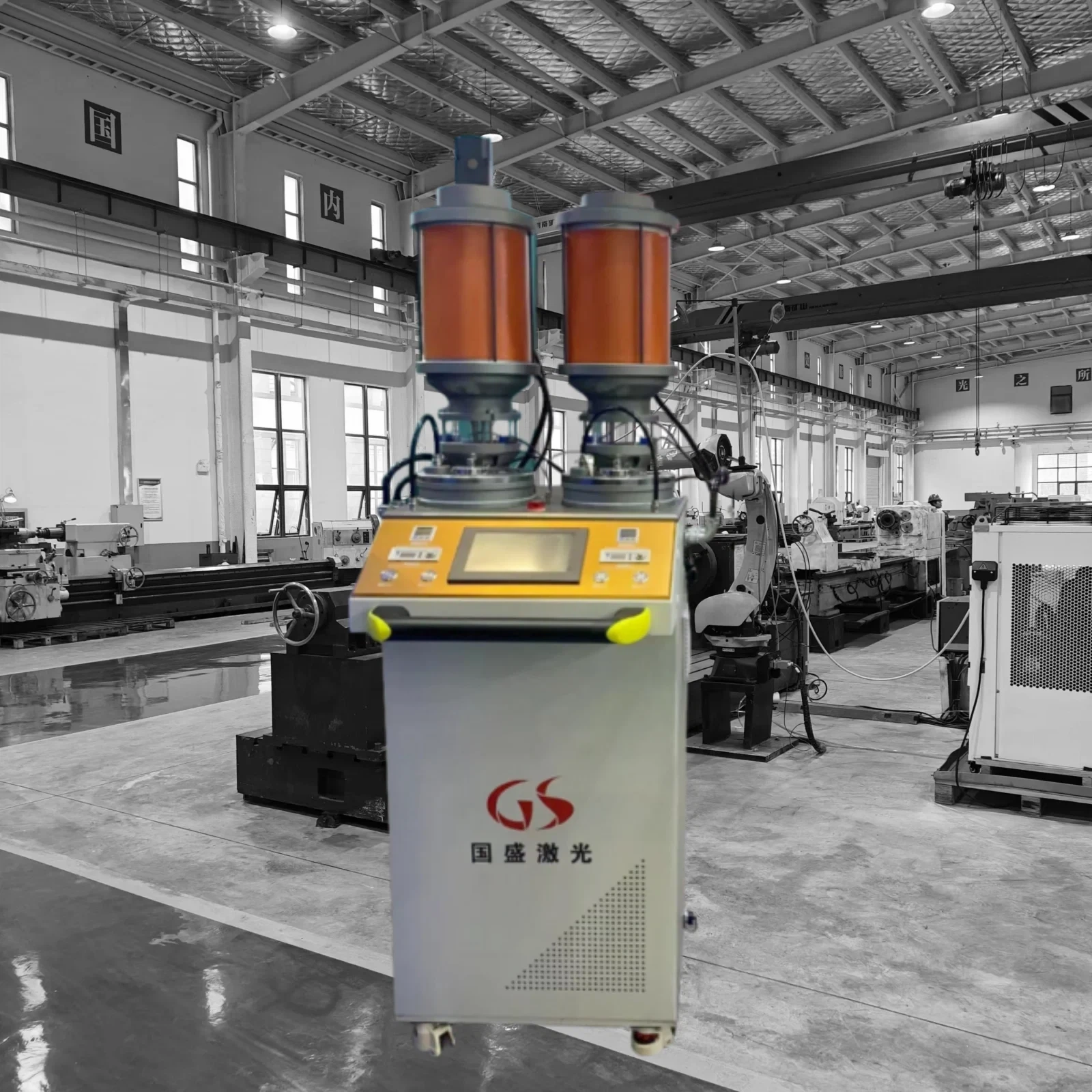
Powder Feeder

Laser Hardening Head
Laser Cladding: Redefining Industry Standards
In conclusion, laser cladding represents a paradigm shift in surface engineering and component repair. Its benefits-minimal thermal distortion, superior metallurgical bonding, enhanced wear/corrosion resistance, and unparalleled material flexibility-make it decisively outperform conventional methods for critical applications. As a leading-edge laser additive manufacturing process, it offers industries like aerospace, power generation, and oil & gas a reliable, efficient, and sustainable path for asset life extension and performance enhancement, solidifying its role as the next-generation standard for high-performance cladding and repair.
FAQ
Q: How does laser cladding differ from traditional welding for repair?
A: Laser cladding uses a focused laser beam for precise, low-heat input, minimizing part distortion and creating a superior metallurgical bond. Traditional welding applies broader heat, risking damage to the original component, making laser cladding ideal for precision turbine blade repair and aerospace part refurbishment.
Q: What materials can be used in the laser cladding process?
A: The process is highly versatile, utilizing powder or wire feedstock materials including stainless steels, nickel alloys, cobalt-based alloys, and metal matrix composites. This allows for tailored coatings for specific needs like wear resistance or corrosion protection on industrial components.
Q: Why is laser cladding better for corrosion-resistant coatings?
A: Laser cladding produces extremely dense, non-porous layers with excellent alloy homogeneity. This prevents corrosive agents from penetrating, offering superior protection compared to traditional methods like thermal spraying, which can contain pores that initiate corrosion.