

The Safety Challenge in Precision Manufacturing
Laser welding technology, with its advantages of high precision, reduced heat-affected zone (HAZ), and efficiency, has become an indispensable key process in modern industries such as automotive, aerospace, electronics, and medical devices. However, this high-energy technology, while delivering manufacturing benefits, also brings unique occupational safety risks. This article aims to provide a comprehensive guide for industry professionals and managers, thoroughly analyzing the potential hazards in laser welding operations, the best safety practices companies should adopt, and systematically outlining the relevant international and U.S. regulatory standards. The goal is to ensure a safe and compliant working environment, guaranteeing the well-being of operators while pursuing high-efficiency production.

Identifying the Four Critical Hazards in Laser Welding
The core risks of laser welding stem from the high-power, concentrated light beam it emits and the thermal effects it generates. Recognizing these potential hazards is the first step in formulating an effective safety strategy. First, eye damage is the foremost and most severe risk; both direct and reflected laser beams can cause permanent retinal burns, leading to blindness, even from brief exposure. Second, thermal radiation and skin burns must not be overlooked; high-intensity lasers can directly burn the skin, and the hot molten metal or heated surfaces produced during welding can cause severe thermal injuries. Furthermore, the hazardous fumes and gases (such as metal oxides) generated by laser welding pose a long-term threat to the respiratory health of workers if not adequately extracted. Finally, vigilance is required against equipment operation hazards and the risk of fire and explosion, as the intense heat can ignite nearby flammable materials in the work area, resulting in property damage and personnel injury.
Five Strategies from PPE to Environmental Control
Establishing a robust set of laser welding safety practices is crucial for risk management. This strategy must cover personal protection, environmental engineering controls, and operating procedures. Personal Protective Equipment (PPE) serves as the primary line of defense: operators must wear specialized laser safety glasses rated for the specific laser wavelength, heat-resistant flame-retardant protective clothing, and gloves to mitigate light radiation and thermal hazards. Regarding the workplace environment, strict controlled access must be enforced, allowing only authorized personnel into the welding area. The optimization of ventilation systems is particularly critical, requiring the installation of high-efficiency Local Exhaust Ventilation (LEV) systems to capture welding fumes at the source, thus ensuring air quality. Moreover, regular equipment maintenance and calibration prevent malfunctions that could lead to accidents and ensure that all laser protective barriers are fully functional.


Employee Training and Continuous Risk Assessment
Technical safeguards and environmental controls require sound systematic support to be effective. Firstly, laser safety training is an indispensable component; all employees involved in laser welding must receive comprehensive education on laser hazards, the correct use of PPE, emergency procedures, and safety protocols. This training should be regularly updated to accommodate new equipment or process changes. Secondly, companies must implement a process of continuous risk assessment. Before commencing any new welding task or switching materials, potential hazards (such as the toxicity of new material fumes, specific reflection angles) should be systematically identified, the likelihood and severity of risks evaluated, and corresponding mitigation measures developed. Through this proactive approach to risk management, the uncertainties in operation can be minimized, ensuring the safety compliance of all laser welding operations.
International and U.S. Compliance Frameworks for Laser Welding
Adherence to industry regulatory standards is the legal baseline for corporate safety management and the international passport for laser welding safety compliance. In the U.S., OSHA (Occupational Safety and Health Administration) sets several core standards, such as 29 CFR 1910.132, which mandates the use of personal protective equipment, and 29 CFR 1910.1200 (Hazard Communication Standard), which requires employers to inform employees about chemical hazards, including those from welding fumes. In the specialized field, the ANSI Z136.1 standard is the core guidance document for laser safety use in the U.S., detailing laser hazard control, safety zone designation, and classification schemes. Internationally, ISO 11553-1 provides global specifications for the safety design of laser processing machines. Companies should use these standards as a blueprint to build their safety management system, ensuring that all laser welding processes not only comply with national regulations but also align with international best practices.

Laser equipment components

Fiber Laser Machine

Laser Cladding Head
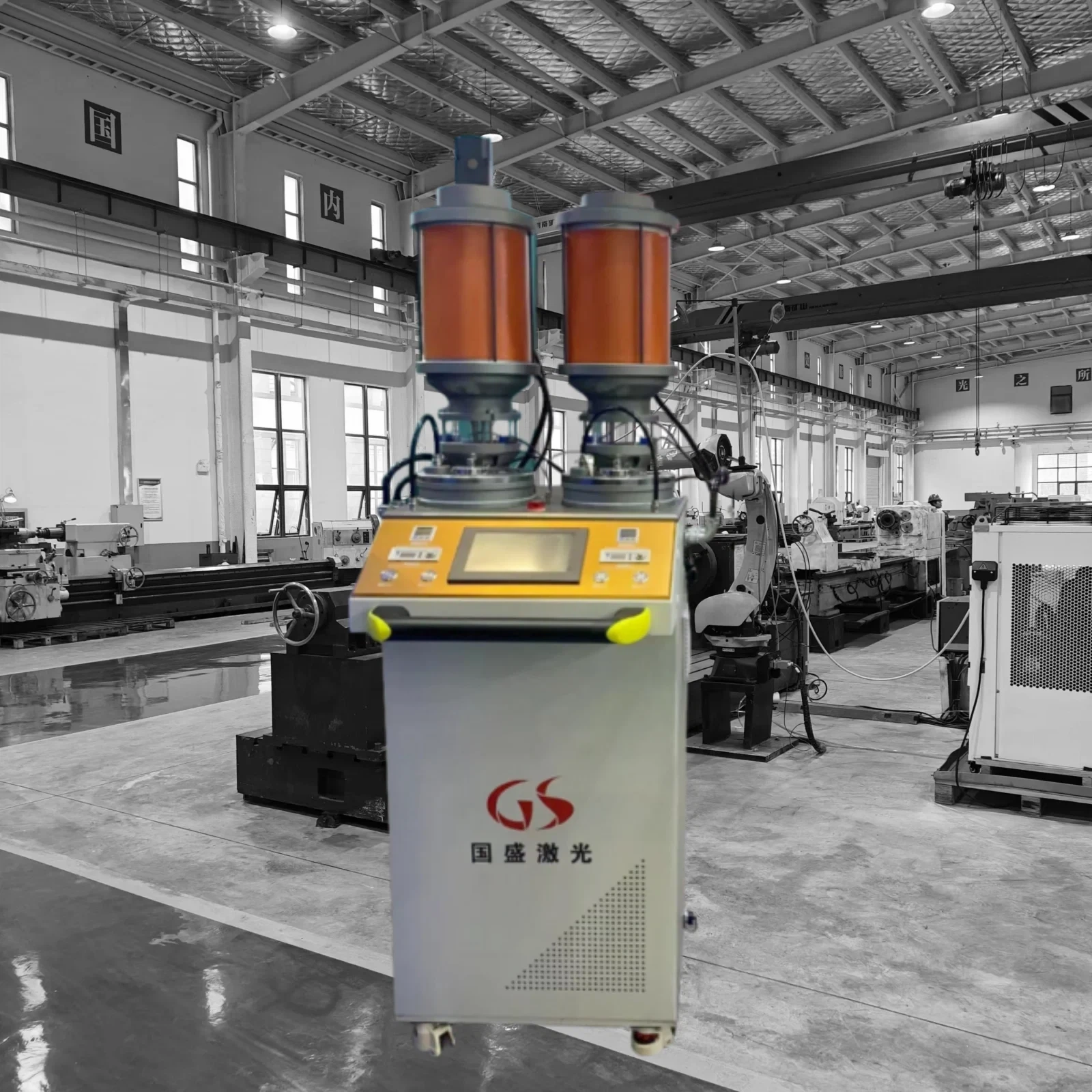
Powder Feeder

Laser Hardening Head
Building an Unbreakable Laser Welding Safety Culture
Laser welding safety is an ongoing, dynamic management process within the field of precision manufacturing. Despite the significant production potential of laser welding technology, its inherent high-energy risks demand that we adopt a proactive and multi-layered safety management strategy. A successful safety culture relies on the synergy of three core elements: robust engineering controls (such as local ventilation and protective barriers), strict operational protocols (such as PPE use and controlled access), and a commitment to continuous employee education and compliance. By systematically following the regulatory standards set by bodies like OSHA, ANSI, and ISO, and integrating safety practices into daily operations, companies can effectively mitigate risks, achieving the perfect balance between high-efficiency manufacturing and a zero-accident work environment, ensuring the long-term sustainability of laser welding operations.