

Industry Insight: A New Dimension in High-Precision Motor Restoration
In industrial power systems, wear on motor rotor bearings often leads to total equipment failure. Traditional repair methods, such as manual welding or electroplating, are increasingly limited by large heat-affected zones and weak bonding strength. Laser cladding repair technology leverages the physical advantages of high power density, superior directionality, and exceptional coherence to achieve micron-level restoration. This technology not only significantly extends equipment service life but also serves as a core method in green remanufacturing due to its "cold processing, heat treatment" characteristics. This article explores the essence of this process, analyzing how it restores physical strength while preserving base material integrity.

Process Essence: Craftsmanship from Pre-treatment to Material Layering
Successful laser cladding begins with rigorous surface pre-treatment. First, oil, oxide layers, and fatigue cracks must be thoroughly removed via mechanical or chemical means to expose the substrate's metallic luster. This is followed by the material preparation stage, where selecting cladding materials is vital. High-performance alloy powders must be matched to the working environment, ensuring hardness and thermal expansion coefficients are compatible with the substrate. Whether using pre-placement or synchronous feeding, these powders are applied uniformly to the damaged area. This stage builds a pure, high-compatibility foundation, determining the subsequent bonding strength and the bearing's future wear resistance.
Core Focus: Microscopic Melt Pool Control in Laser Cladding
The core of laser cladding lies in the precise regulation of energy output. A high-energy laser beam instantaneously melts the cladding material and the substrate surface, forming a tiny, stable micro-melt pool. The key is controlling the laser power density; excessive power causes substrate deformation, while insufficient power leads to porosity. Due to the laser's excellent monochromaticity and coherence, the melting process is completed in milliseconds, resulting in an extremely narrow heat-affected zone. This "rapid-in, rapid-out" energy exchange ensures a robust metallurgical bond. Technicians must monitor scanning speed and overlap rates in real-time, optimizing paths to create a dense, defect-free reinforced layer.


Post-Processing: The Key Step for Hardness and Wear Resistance
Post-cladding treatment is the "finishing touch" that dictates the bearing's final performance. Initial layers often harbor residual stresses or high surface roughness, necessitating scientific heat treatment-such as aging or tempering-to optimize the microstructure. Controlling cooling temperatures and soaking times is critical to prevent micro-cracks caused by thermal gradients and to stimulate the precipitation of hard phases, which significantly enhances micro-hardness and corrosion resistance. Subsequent precision machining, such as grinding, restores the repaired part to its original design tolerances. These steps ensure that the repaired rotor bearing matches or even exceeds the impact and wear resistance of a brand-new component.
Standards & Environment: Systematic Quality Management
Laser cladding is more than just operating equipment; it is a rigorous system of management. During implementation, environmental stability is paramount, as dust, vibration, or humidity fluctuations can cause inclusions or pores. Furthermore, real-time monitoring of parameters and standardized workflows are central to quality assurance. Repair enterprises should establish comprehensive process databases to match optimal power curves with different rotor materials. By ensuring full-process traceability-from raw material entry to cladding logs and post-treatment temperature control-the advantages of efficiency and quality can be maximized. Only under a standardized framework can laser cladding provide high-reliability value for the motor maintenance industry.

Laser equipment components

Fiber Laser Machine

Laser Cladding Head
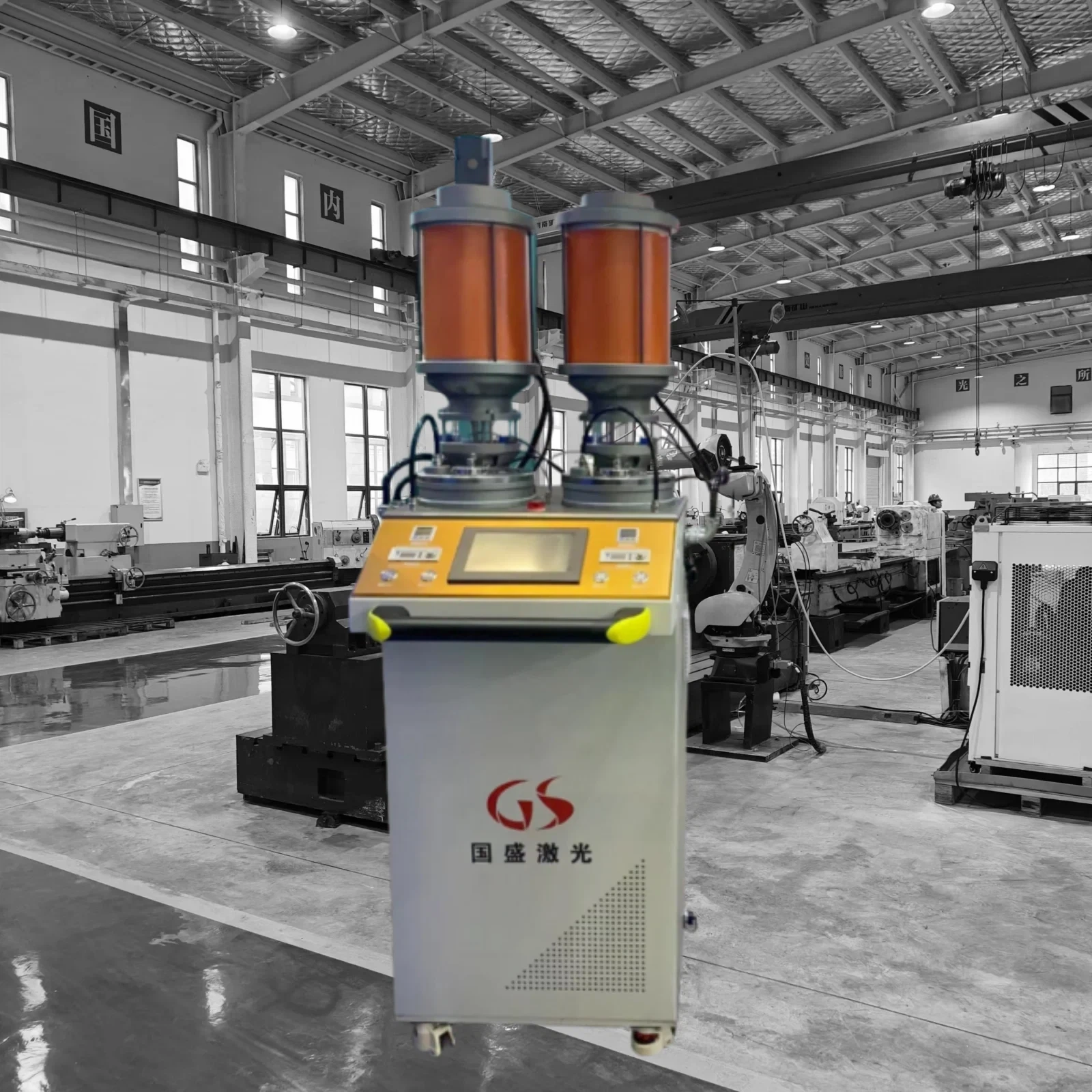
Powder Feeder

Laser Hardening Head
The Future Choice for Reconstructing Rotor Performance
In summary, laser cladding for motor rotor bearings is leading a maintenance revolution with its high efficiency, low loss, and superior bonding strength. By precisely controlling power density, optimizing material ratios, and enforcing strict post-processing, this technology solves the traditional problems of deformation and short service life. It saves enterprises significant replacement costs and downtime. As laser technology iterates and automation levels rise, this advanced green manufacturing process will see broader application in energy, transportation, and heavy manufacturing. As the ideal solution for motor repair, laser cladding provides a solid performance guarantee for modern industrial power sources through the power of science.