

Introduction to Advanced Surface Engineering
In the realm of modern precision manufacturing, the performance of tool steels directly dictates the overall efficiency of production lines and the quality consistency of the final product. However, as dies and molds are frequently subjected to extreme environments involving high pressure, intense friction, and rapid thermal cycling, surface failure remains the primary cause of premature equipment retirement. Laser cladding for tool steels has emerged as a cutting-edge surface modification method, utilizing high-energy laser beams to fuse high-performance alloys onto the substrate, fundamentally overcoming the limitations of traditional repair techniques. This article provides an in-depth analysis of how this technology achieves a performance leap through laser deposition for tool steel repair, helping enterprises implement a more cost-effective methods to improve mold wear resistance while ensuring the long-term service stability of their production tools.

Metallurgical Principles and Advantages of Laser Deposition
The core technical superiority of laser cladding for tool steels lies in the formation of an exceptionally strong metallurgical bond. Unlike traditional thermal spraying or physical deposition, this process uses a laser to instantaneously melt both the alloy powder and the substrate surface, creating a seamless fusion layer. This technique features an extremely low dilution rate, ensuring that the cladding layer retains the full hardness and corrosion resistance of the precursor alloy even at minimal thicknesses. During the execution of laser deposition for tool steel repair, precise energy control compresses the Heat Affected Zone (HAZ) to its absolute minimum, effectively preventing the substrate from annealing, softening, or undergoing thermal distortion. This microstructural superiority provides the most robust physical foundation for the surface reinforcement of high-precision mold cavities and complex industrial components.
High Performance Material Solutions for H13 Tool Steel
Regarding the most widely used hot-work tool steels in the industry, the surface modification of H13 tool steel remains a central focus of contemporary laser processing research. To withstand high-temperature erosion and thermal fatigue, technical teams typically select cobalt-based (Stellite) or nickel-based hardfacing alloys, often reinforced with specific proportions of nano-carbides. These hard phases are uniformly distributed within the laser melt pool, allowing the modified surface hardness to jump from the base 45 HRC to well over 62 HRC. As a highly competitive methods to improve mold wear resistance, laser modification does more than just provide excellent red hardness; it allows for the customization of alloy compositions to solve specific issues such as galling and scuffing during the stamping of high-strength steels, significantly improving the surface finish of complex stamped parts.


Fatigue Resistance in the Laser Cladding Hardfacing Process
Compared to traditional hard chrome plating or nitriding treatments, the laser cladding hardfacing process shows significantly superior performance in enhancing the fatigue strength of industrial molds. The ultra-fast cooling rates associated with laser processing (up to 10^6 K/s) result in an extremely fine equiaxed grain structure, which mechanically inhibits the initiation and propagation of micro-cracks. Furthermore, laser surface hardening technology for molds introduces a beneficial residual compressive stress gradient at the workpiece surface. This compressive stress zone acts as a protective shield, counteracting the impact of tensile stress caused by external cyclic loads. Consequently, this not only solves the common problem of brittle coating delamination found in traditional processes but also enables the mold to demonstrate mechanical endurance far exceeding its original factory state when facing high-frequency pulse pressures.
Quality Assurance through Optimization of Process Parameters
The key to achieving high-quality surface reinforcement layers lies in the precise implementation of the optimization of laser cladding process parameters. In practice, variables such as laser power, scanning trajectory, powder feed rate, and overlap ratio form a complex correlation matrix that directly determines the density and smoothness of the cladding layer. Establishing standardized process packages for different grades of tool steel is a prerequisite for ensuring quality consistency. For instance, when performing large-area laser cladding for tool steels, optimizing the scanning path can effectively control heat accumulation and prevent micro-cracks caused by stress overload. Additionally, integrating intelligent sensors into a closed-loop control system allows for real-time monitoring of the melt pool state, ensuring that every inch of the modification layer meets aerospace-grade quality requirements, truly transitioning from empirical processing to digital precision manufacturing.

Laser equipment components

Fiber Laser Machine

Laser Cladding Head
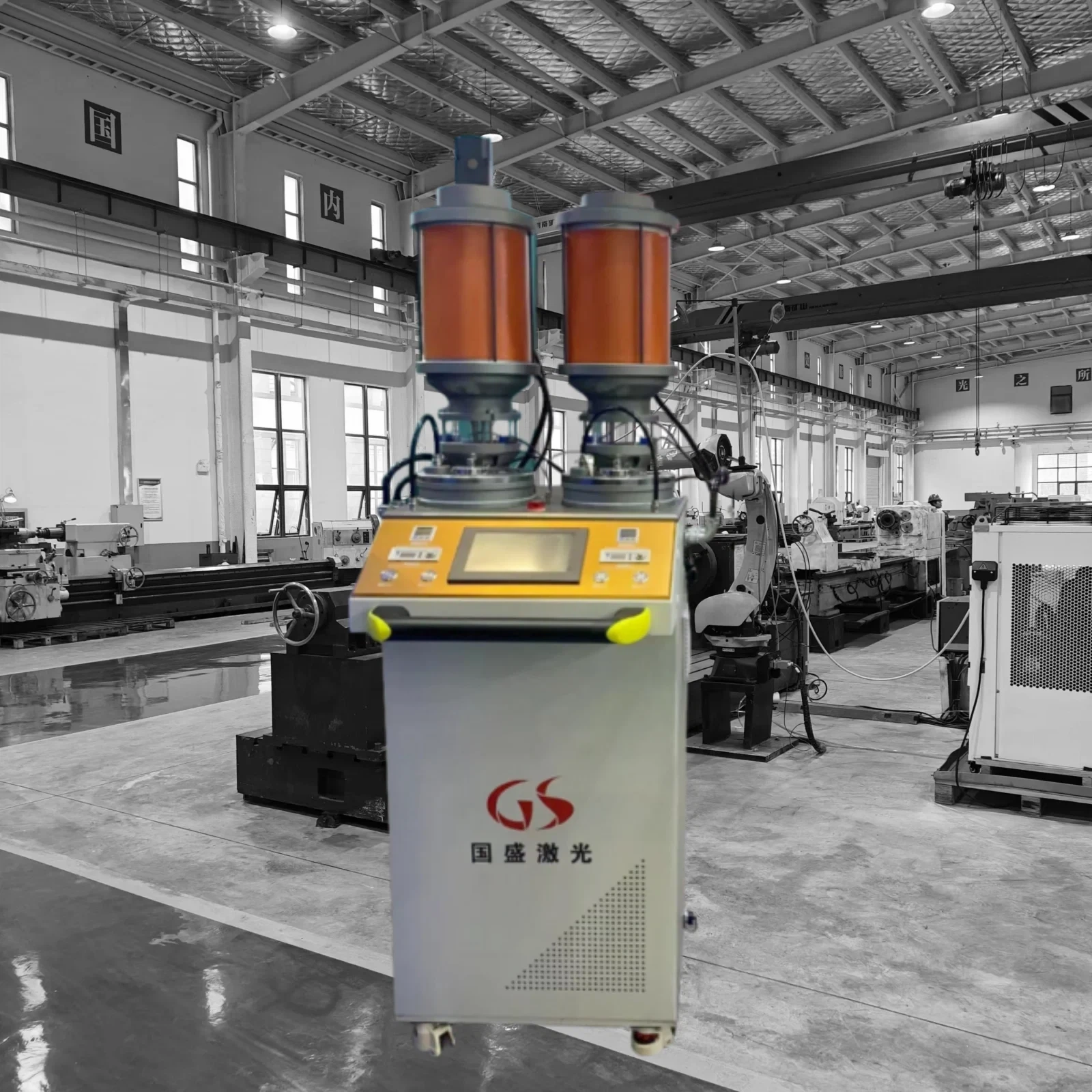
Powder Feeder

Laser Hardening Head
Conclusion on the Value of Laser Surface Modification
In summary, laser cladding for tool steels is not merely an efficient repair technique but a comprehensive surface modification strategy for modern manufacturing. It achieves the dual value of refurbishing old components and strengthening new ones through laser deposition for tool steel repair, significantly reducing the consumption of expensive tool steel materials. As the optimization of laser cladding process parameters continues to mature, this eco-friendly and efficient processing method is gradually replacing high-pollution, low-life traditional technologies. For enterprises pursuing cost reduction and efficiency, mastering and applying advanced laser surface hardening technology for molds will not only drastically extend the service life of their tools but also provide a decisive competitive edge in the global manufacturing arena through higher process reliability and cost-effectiveness.