

Strategic Value of Tungsten Carbide in Modern Additive Manufacturing
Tungsten carbide (WC) has long been recognized as a cornerstone material in the realm of advanced surface engineering, primarily due to its unparalleled hardness and exceptional resistance to abrasive wear. In recent years, the integration of tungsten carbide powder into high-speed laser cladding processes has revolutionized how industries approach the protection of high-value mechanical components. High-speed laser cladding represents a significant leap forward from traditional thermal spraying or conventional cladding methods, offering a more precise and efficient means of applying protective coatings. By utilizing a high-intensity laser beam to melt both the substrate and the WC-based feedstock simultaneously, manufacturers can achieve a superior metallurgical bond that far exceeds the performance of mechanical coatings. This article explores the intricate relationship between tungsten carbide materials and high-speed laser cladding technology, highlighting how this synergy addresses the growing demands for durability in extreme operating environments. As global industries seek more sustainable and cost-effective maintenance solutions, understanding the application of these advanced composite coatings becomes essential for optimizing equipment longevity and operational reliability.

Technical Superiority of High Speed Laser Cladding Processes
The primary advantage of high-speed laser cladding lies in its ability to operate at processing speeds typically exceeding 10 meters per minute, which fundamentally changes the thermal dynamics of the coating process. Unlike conventional laser cladding, which may involve higher heat inputs and slower speeds, the high-speed variant significantly reduces the heat-affected zone (HAZ) within the substrate material. This minimization of thermal impact is crucial for maintaining the structural integrity and mechanical properties of the base metal, preventing distortion and undesirable phase transformations. Furthermore, the rapid cooling rates inherent in this additive manufacturing technique promote the formation of extremely fine microstructures within the deposited layer. These fine microstructures contribute to enhanced coating density and superior interfacial bonding between the tungsten carbide layer and the underlying component. By optimizing the cooling gradient, high-speed laser cladding ensures that the resulting surface is not only exceptionally hard but also remarkably resilient against delamination under cyclic loading or high-pressure conditions, making it an ideal choice for high-precision industrial applications.
Material Synergy Between Tungsten Carbide and Metal Matrices
To maximize the performance of tungsten carbide in laser cladding, the powder is typically combined with a ductile metal matrix, such as nickel, cobalt, or iron-based alloys. This combination creates a metal matrix composite (MMC) that balances the extreme hardness of WC particles with the toughness and corrosion resistance of the surrounding alloy. Nickel-based matrices are particularly popular for applications requiring a combination of wear and corrosion resistance, while cobalt-based alloys are often selected for high-temperature environments. The interaction between the WC particles and the molten matrix during the high-speed cladding process is critical; if the laser energy is too high, the carbide particles may dissolve, leading to the formation of brittle phases that can compromise the coating's toughness. Conversely, when properly managed, the high-speed process ensures a uniform distribution of un-melted or partially melted WC grains throughout the matrix. This uniform dispersion creates a "pavement" of hard particles that effectively shield the softer matrix from abrasive media, drastically increasing the overall lifespan of the treated industrial workpiece.


Critical Control of Processing Parameters for Optimal Quality
Achieving a high-quality tungsten carbide coating requires precise control over several interconnected processing parameters, starting with laser power and scanning speed. Typical power settings range between 1000W and 4000W, which must be carefully balanced against scanning speeds of 10 to 20 meters per minute to ensure complete melting of the matrix without overheating the WC particles. Additionally, the powder feed rate-generally maintained between 1 kg/h and 5 kg/h-plays a vital role in determining the final thickness and consistency of the cladded layer. An inconsistent feed rate can lead to porosity or uneven surface profiles, necessitating extensive post-process machining. The use of high-purity argon as a shielding gas is another non-negotiable factor, as it prevents oxidation of the molten pool and ensures the chemical purity of the deposited material. By fine-tuning these variables, manufacturers can produce coatings with tailored hardness profiles ranging from 1500 to 2500 HV, ensuring that the specific requirements of the application-whether it involves impact resistance or pure sliding wear-are met with absolute precision.
Strategic Applications in Heavy Industry and Aerospace
The unique properties of WC-based high-speed laser cladding have led to its widespread adoption across diverse sectors, including mining, oil and gas, and aerospace. In the mining industry, components such as drill bits and crushers are subjected to severe abrasion; applying a tungsten carbide coating can extend the service life of these tools by several hundred percent. Similarly, in the oil and gas sector, high-speed laser cladding is used to protect drilling collars and hydraulic cylinders from the combined effects of erosion and corrosive brine. The aerospace industry also leverages this technology to enhance the wear resistance of turbine blades and landing gear components, where weight-to-performance ratios are critical. Even the automotive sector has begun integrating WC coatings into engine components to reduce friction and improve fuel efficiency. By providing a robust barrier against environmental degradation, high-speed laser cladding with tungsten carbide powder allows these industries to reduce downtime, lower maintenance costs, and improve the overall efficiency of their most critical mechanical systems.

Laser equipment components

Fiber Laser Machine

Laser Cladding Head
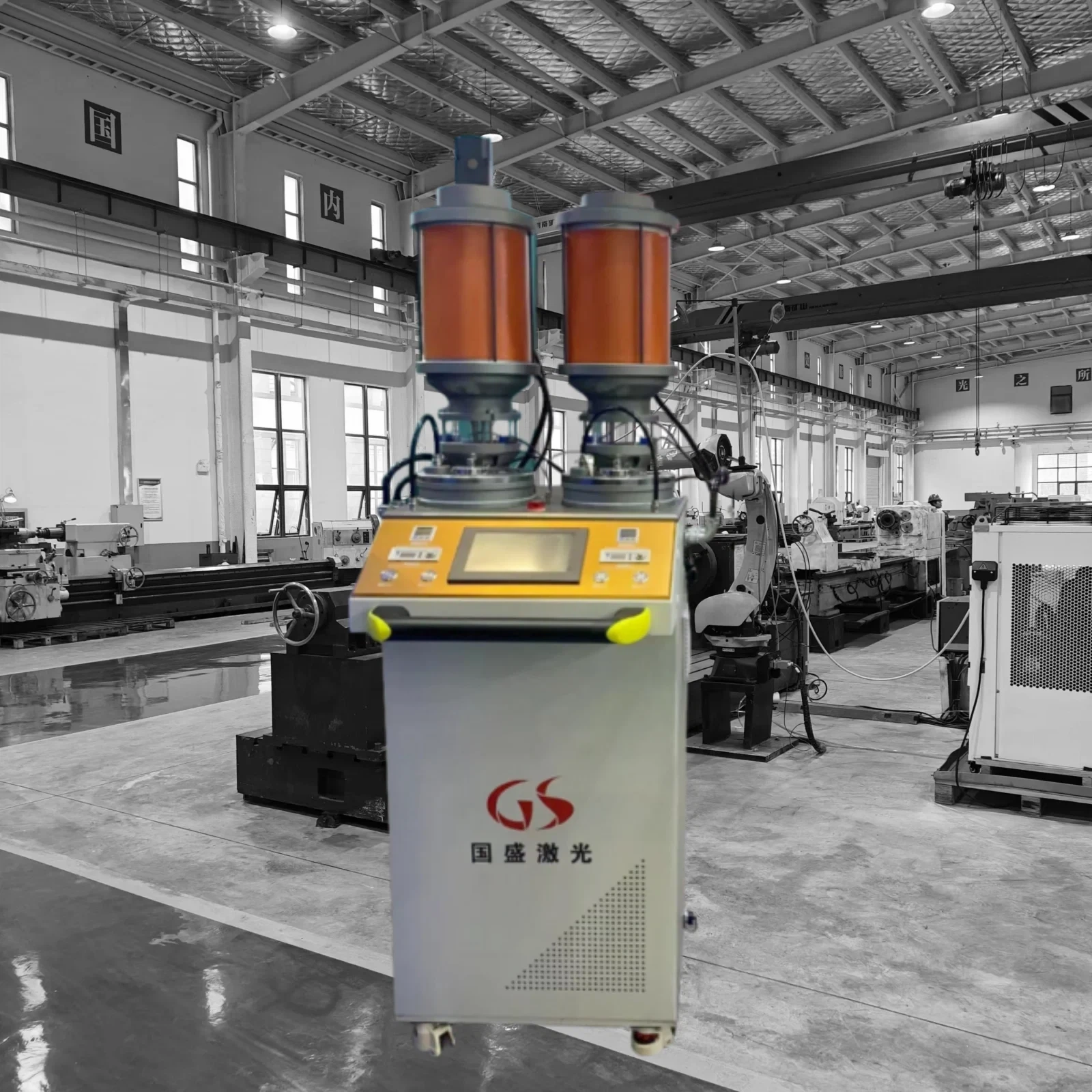
Powder Feeder

Laser Hardening Head
Future Outlook for Laser Additive Manufacturing Solutions
As laser additive manufacturing technology continues to evolve, the integration of tungsten carbide powder is expected to become even more sophisticated and cost-effective. Future developments will likely focus on the use of multi-beam laser systems and AI-driven process monitoring to further refine the microstructural characteristics of WC coatings. These advancements will enable the creation of functionally graded materials, where the concentration of tungsten carbide varies through the thickness of the coating to optimize both surface hardness and core toughness. Furthermore, the transition toward more sustainable manufacturing practices favors high-speed laser cladding due to its high material utilization rates and reduced energy consumption compared to traditional surfacing methods. For equipment manufacturers and end-users alike, staying at the forefront of these technological shifts is essential for maintaining a competitive edge in a demanding global market. By leveraging the power of tungsten carbide and high-speed laser systems, the industry is moving toward a future where component failure due to wear and corrosion is significantly mitigated, paving the way for more durable and efficient industrial infrastructure.
FAQ
Q: Why is tungsten carbide preferred over other materials for high-speed laser cladding?
A: Tungsten carbide offers a unique combination of extreme hardness (up to 2500 HV) and thermal stability. When used in high-speed laser cladding, it creates a dense, wear-resistant barrier that significantly outperforms traditional steel or chrome-based coatings in abrasive and high-temperature environments.
Q: How does high-speed laser cladding improve the lifespan of mining tools?
A: High-speed laser cladding applies a thin, ultra-hard WC-reinforced layer with minimal heat distortion. This enhances the tool's surface durability against rocks and minerals while maintaining the internal toughness of the tool, preventing premature breakage and reducing frequent replacement costs.
Q: What are the typical laser power and speed settings for WC powder cladding?
A: For optimal results, laser power usually ranges from 1000W to 4000W, paired with high scanning speeds exceeding 10 m/min. This balance ensures high efficiency and a small heat-affected zone, preserving the mechanical properties of the underlying industrial component.