

Introduction to Modern Laser Ablation
Laser cleaning technology represents a groundbreaking advancement in industrial maintenance and surface preparation. Utilizing high-energy-density pulsed laser beams, this non-contact process removes contaminants such as oxides, paints, coatings, and biological growth from a substrate without damaging the underlying material. Its precision and environmental benefits, producing no secondary waste compared to sandblasting or chemical cleaning, make it an indispensable tool for sectors demanding the highest quality standards, from aerospace manufacturing to cultural heritage restoration.

The Precision Engine: Principles of Pulsed Laser Cleaning
Pulsed laser cleaning operates through precise photoablation. Short, high-intensity laser pulses are absorbed by the surface contaminant, causing rapid thermal expansion, sublimation, or instantaneous plasma conversion, which lifts the material from the workpiece. Key parameters like laser wavelength (often from fiber laser sources), pulse duration, fluence (energy density measured in J/cm²), and scan speed are meticulously calibrated. This control allows selective removal; for instance, a rust layer on titanium alloy can be ablated without affecting the metal's integrity. This selective ablation threshold management is the core of its precision, making it superior for delicate substrates.
Dominant Applications: From Aerospace to Artifacts
The technology excels in critical applications. In the aerospace sector, pulsed laser systems are essential for depainting aircraft skins and removing oxide layers from welds on aluminum and titanium components before repair. In heavy industry, cleaning rubber tire molds and preparing steel surfaces for coating are common tasks. A revolutionary application is in semiconductor and optical substrate cleaning, where laser-induced plasma shockwave or laser-assisted wet cleaning removes micron-sized particles without surface damage. Furthermore, in cultural heritage restoration, controlled UV laser parameters successfully clean mold plaques from ancient rice paper or soot from stone sculptures, preserving irreplaceable artifacts.


Advantages Over Traditional Surface Preparation Methods
Compared to traditional methods, pulsed laser cleaning offers unmatched benefits. Mechanical methods like sandblasting use abrasive media that can erode the substrate and require costly consumables disposal. Chemical cleaning involves hazardous solvents, creating environmental pollution and worker safety risks. Laser cleaning, however, is a dry and consumable-free process. It eliminates media cost and waste disposal issues. Its non-abrasive nature ensures zero mechanical wear on the base material, and its pinpoint accuracy allows for automation integration with robotics, enabling the cleaning of complex geometries like engine parts or circuit board conformal coatings with consistent results.
Technical Considerations for Effective Implementation
Successful implementation depends on matching the pulse laser cleaning equipment to the specific task. Key factors include the contaminant composition (organic paint vs. inorganic oxide), the substrate material (metal, stone, or composite), and the desired finish. Operators must optimize parameters such as pulse frequency, beam spot size, and overlap rate to achieve optimal ablation rate and cleanliness. For example, cleaning a thick epoxy coating requires a different pulse energy setting than removing a thin oxidation layer from a copper wire. Advanced systems offer customizable parameter libraries for different workpiece categories, streamlining the process for operators.

Laser equipment components

Fiber Laser Machine

Laser Cladding Head
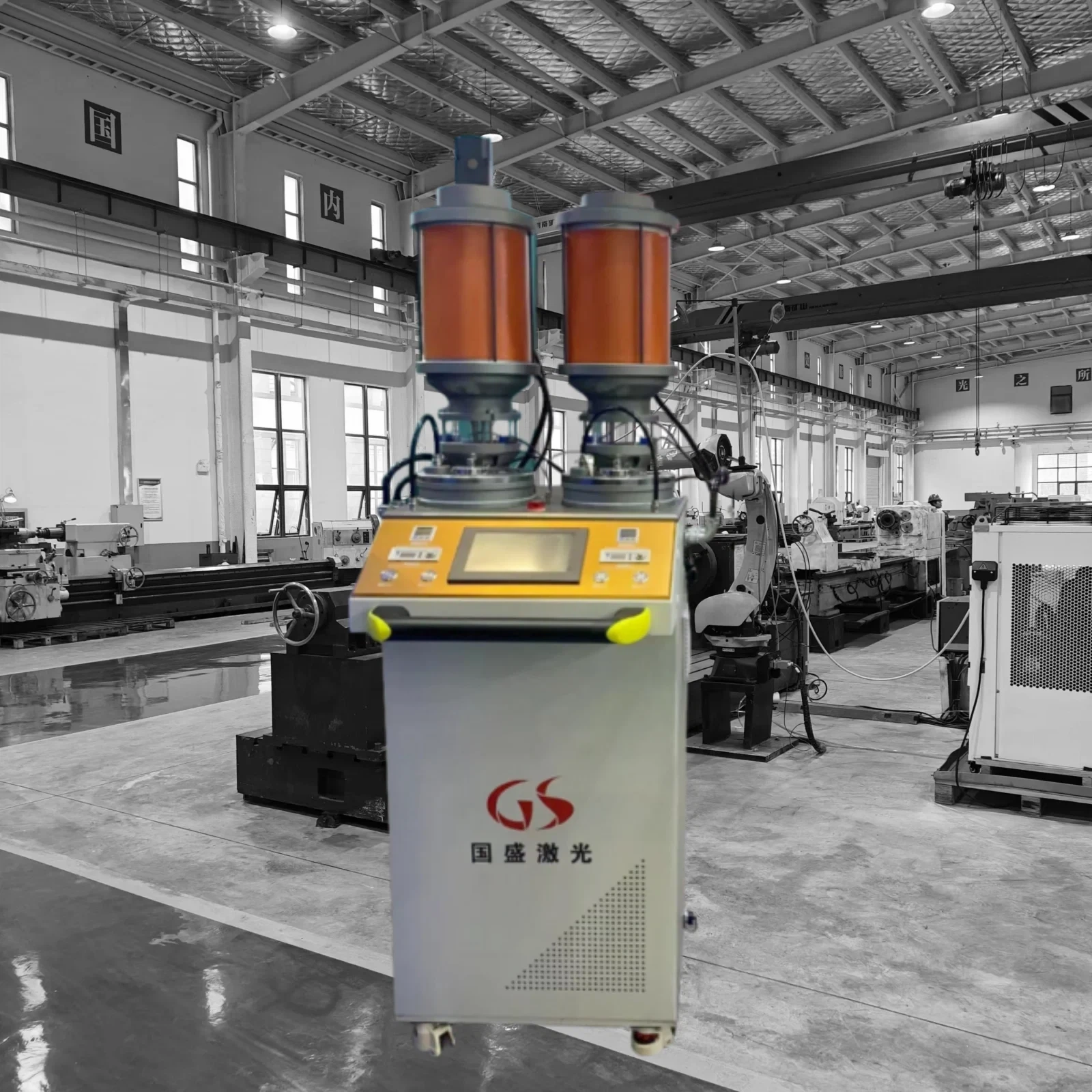
Powder Feeder

Laser Hardening Head
The Future of Contactless Cleaning
Pulsed laser cleaning is redefining surface treatment across industries. Its core value lies in providing a green, precise, and highly controllable alternative that enhances product quality and operational safety. As technology evolves, we anticipate broader adoption in additive manufacturing post-processing, nuclear decontamination, and high-volume production lines. The synergy of more robust fiber laser sources, intelligent beam delivery, and automated robotic systems will continue to expand the boundaries of this versatile technology, solidifying its role as a cornerstone of advanced manufacturing and maintenance.
FAQ
Q: Is pulsed laser cleaning suitable for all types of materials and contaminants?
A: Pulsed laser cleaning is highly versatile but requires parameter optimization. It is excellent for removing oxides, paints, and coatings from metals, and for delicate work on stone or paper. The system must be tuned to ensure the contaminant's ablation threshold is lower than the substrate's damage threshold for safe, effective cleaning.
Q: How does laser cleaning compare to dry ice blasting in terms of surface damage?
A: Laser cleaning is a non-contact, non-abrasive process that imposes no mechanical stress, making it safe for delicate surfaces. Dry ice blasting, while also dry, uses kinetic energy from impacting media, which can potentially damage softer substrates or intricate details.
Q: Can laser cleaning systems be automated for large-scale industrial use?
A: Absolutely. Pulsed laser cleaning heads are easily integrated with multi-axis robotic arms or CNC gantries, enabling fully automated, programmable cleaning of large or complex parts like aircraft fuselages, ship hulls, or structural steel, ensuring consistent quality and high throughput.