

Introduction to Next-Generation Laser Cladding Solutions
Laser cladding technology has evolved from a specialized repair technique into a cornerstone of modern additive manufacturing and surface engineering. This advanced process, which utilizes a high-energy laser beam to fuse premium metallic powders onto a substrate, is revolutionizing how industries approach component protection, restoration, and performance enhancement. For sectors like aerospace, oil & gas, power generation, and heavy machinery, the ability to apply wear-resistant, corrosion-resistant, and thermally stable coatings directly onto critical parts-such as turbine blades, shafts, valves, and extrusion screws-offers unprecedented value. This article delves into the key technological breakthroughs propelling laser cladding forward, analyzes its quantifiable economic impact, and explores the future trends set to expand its role in smart, sustainable manufacturing.

Key Technological Drivers Enhancing Laser Cladding Performance
Recent advancements in core system components are fundamentally improving laser cladding capabilities. The widespread adoption of high-power fiber lasers, with outputs now routinely exceeding 6-10 kW, enables faster deposition rates, deeper penetration, and superior processing stability for large-scale component repair and cladding. Simultaneously, innovation in material science has led to advanced powder feedstocks, including nano-composite blends and tailored alloy powders (e.g., Stellite, Inconel, tool steel variants), which deliver enhanced hardness and durability. Furthermore, the development of sophisticated multi-axis CNC and robotic integration allows for precise, repeatable cladding on complex geometries. The integration of in-situ alloying capabilities during the cladding process itself provides unmatched flexibility in tailoring final coating properties, from metallurgical bond strength to specific corrosion resistance, meeting stringent application demands.
Data-Driven Impact on Manufacturing Economics and Efficiency
The practical benefits of modern laser cladding are substantiated by compelling industry data. Studies indicate that using laser cladding for component repair and overhaul can reduce costs by 30-50% compared to outright replacement, while extending service life by a similar margin. For instance, repairing a worn hydraulic cylinder rod or a gas turbine compressor blade with a laser-clad coating not only restores dimensions but often upgrades performance beyond the original specification. This translates directly into reduced machine downtime, lower spare parts inventory costs, and a more sustainable operational model through remanufacturing. The technology's precision minimizes material waste-often achieving powder utilization rates above 90%-and its localized heat input preserves the integrity of the base substrate, making it a highly efficient and cost-effective industrial laser additive solution.


The Future Trajectory AI Automation and Advanced Process Control
The next frontier for laser cladding lies in intelligent automation and seamless digital integration. Artificial intelligence and machine learning algorithms are being deployed for real-time process monitoring and closed-loop control. These smart systems can adjust laser power, powder feed rate, and traverse speed instantaneously based on sensor feedback, ensuring flawless clad layer quality and consistency. The adoption of Digital Twin technology allows for virtual simulation and optimization of the entire cladding process for a specific part before any physical work begins, reducing trial-and-error and accelerating development. This push towards smart manufacturing, or Industry 4.0, aims to make laser cladding systems more autonomous, reliable, and accessible for high-mix, high-value production and repair applications across global supply chains.
Expanding Applications in Demanding and Emerging Sectors
Laser cladding is rapidly expanding beyond traditional industrial repair into new, high-value applications. In the aerospace sector, it is used for manufacturing and repairing lightweight, high-strength components from titanium and nickel-based superalloys. The energy sector employs it for applying erosion-resistant coatings on wind turbine gearbox components and for rebuilding drill bits and tool joints in the oilfield. A significant emerging field is biomedical manufacturing, where laser cladding is researched for creating porous, biocompatible coatings on orthopedic implants to improve osseointegration. This versatility underscores its role not just as a repair tool, but as a critical enabler for advanced manufacturing, performance enhancement, and innovative product design across diverse markets.

Laser equipment components

Fiber Laser Machine

Laser Cladding Head
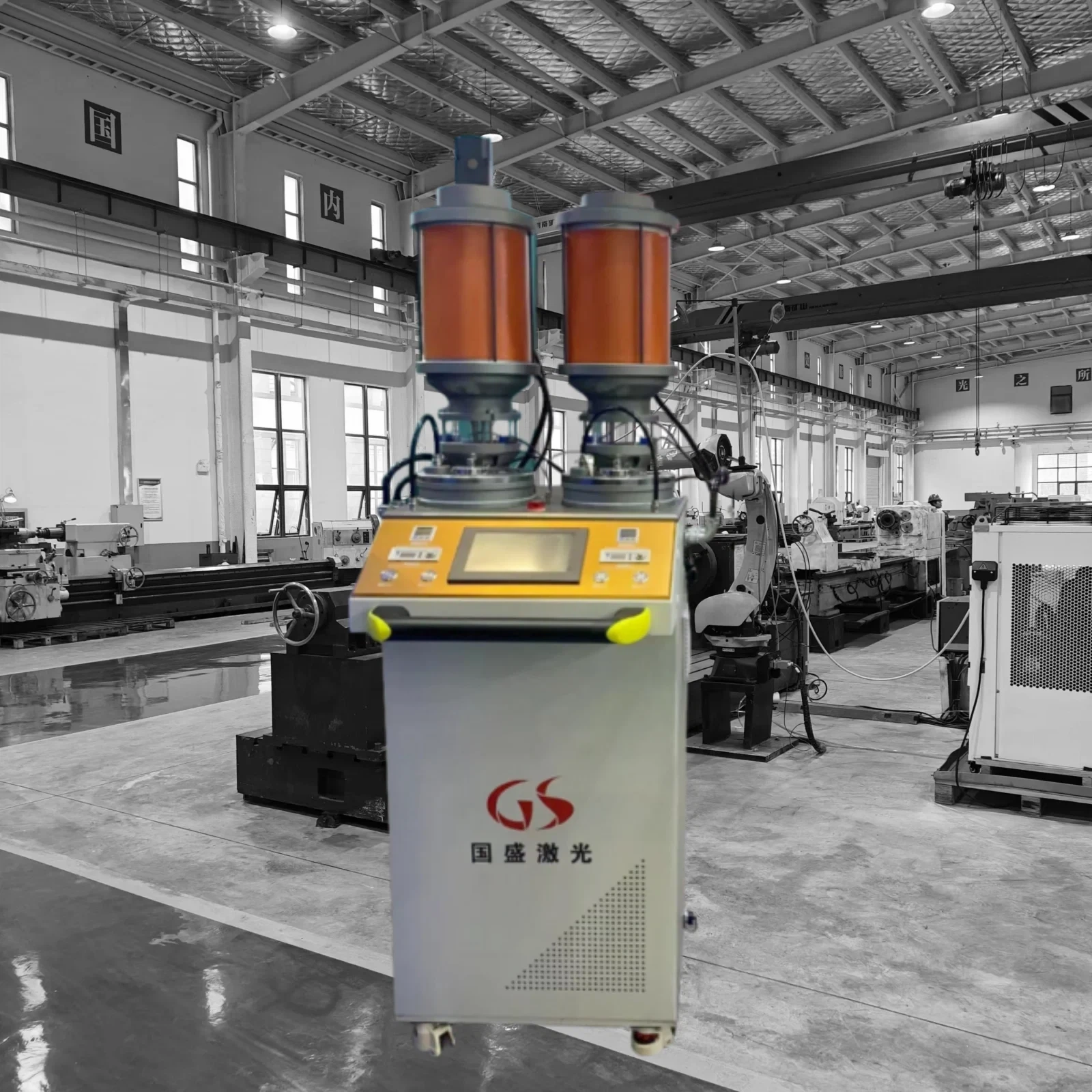
Powder Feeder

Laser Hardening Head
Strategic Integration for Competitive Advantage
In conclusion, laser cladding technology stands at a pivotal point, driven by hardware innovation, material science, and digital transformation. Its proven ability to reduce lifecycle costs, enhance component performance, and support sustainable practices makes it a strategic investment for any forward-looking manufacturing or maintenance operation. As trends like AI-driven process control, eco-friendly powders, and hybrid manufacturing cells mature, laser cladding will become even more integral to building resilient and efficient industrial ecosystems. Embracing these advancements allows companies to secure a significant competitive edge through improved asset longevity, operational reliability, and innovative product capabilities.
FAQ
Q: What are the main benefits of using laser cladding over traditional welding for repair?
A: Laser cladding offers superior benefits: minimal heat input prevents part distortion, a metallurgical bond ensures excellent coating adhesion, and the process allows for precise control over material properties, leading to longer-lasting repairs on critical components like shafts and turbine parts.
Q: Which industries benefit most from laser cladding technology?
A: Key industries include Aerospace (for engine component repair), Oil & Gas (for coating drill tools and valves), Power Generation (for turbine blade restoration), and Heavy Machinery (for rebuilding wear parts like rolls and gears), where it enhances durability and reduces downtime.
Q: What is the future trend for laser cladding systems?
A: The future is intelligent automation. Trends include AI-powered real-time process control for consistent quality, integration with Digital Twins for pre-production simulation, and the development of hybrid manufacturing cells that combine laser cladding with CNC machining for finished parts.