

The Strategic Value of Laser Hardening Technology for Automotive Molds
In the precision machining processes of the automotive manufacturing industry, laser hardening technology for automotive molds undoubtedly stands out as a brilliant gem. This advanced technique has not only revolutionized traditional metal heat treatment methods but has also become a critical enabling technology for enhancing the quality and extending the service life of automotive components, thanks to its unique advantages in high efficiency, precision, and environmental benefits. Laser hardening uses a high-energy density laser beam as a heat source to achieve localized reinforcement on the mold surface without compromising the base material's overall performance. It rapidly heats the surface above the austenite transformation temperature, followed by rapid self-quenching using the mold's own thermal mass, forming a hardened layer with high hardness and excellent wear resistance. This article will explore the core principles, significant advantages, applications, and future trends of this technology, highlighting its vital role in driving the transformation of the automotive industry.

Core Working Principle: Localized Reinforcement and Self-Quenching Mechanism
The core principle of laser hardening for automotive molds lies in its unique "localized reinforcement" mechanism. The process utilizes a high-energy density laser beam to quickly heat the mold surface material above the austenite phase transformation temperature. Crucially, the heated depth is extremely shallow, and the heated area is precisely controlled. Subsequently, due to the large heat capacity and high thermal conductivity of the mold's base material, heat is rapidly dissipated, causing the heated zone to cool down below the martensite transformation point at an extremely fast rate-a process known as self-quenching. Within a very short duration, a dense, fine-grained martensitic hardened layer is formed on the mold surface. This layer exhibits significantly improved hardness and outstanding wear resistance, while the bulk material retains its original toughness and strength. This precise, highly efficient reinforcement method, which leaves the overall performance unaffected, is superior to traditional heat treatments, markedly boosting the reliability and service life of automotive molds.
Distinct Technical Advantages: High Precision, High Efficiency, and Environmental Friendliness
Laser hardening technology offers multiple distinct advantages for its application in automotive molds. Firstly, it provides high precision and flexibility: the laser beam can be focused to extremely small spot sizes, allowing for precise energy control and ensuring sharp, highly accurate hardening area boundaries. Concurrently, the laser processing path is flexible and programmable, easily accommodating the treatment of complex mold surfaces. Secondly, the technology is characterized by high efficiency and energy savings: the laser hardening process is rapid with high energy utilization, significantly reducing energy consumption compared to conventional heat treatment methods. Crucially, laser processing requires almost no large volumes of cooling fluids, drastically reducing wastewater discharge and environmental pollution, thus meeting the stringent environmental standards of modern manufacturing. Ultimately, these combined advantages endow the mold with superior surface properties, including enhanced wear resistance, fatigue resistance, and corrosion resistance.


Typical Application Cases: Reinforcement from Engines to Complex Injection Molds
Laser hardening technology for automotive molds is now widely applied in the production of various critical components. Typical applications include the reinforcement treatment of engine blocks, crankshafts, gears, and various injection molds. For instance, in the production of engine blocks, laser hardening can precisely create a hardened layer on the inner cylinder walls. This layer effectively resists wear and corrosion under the high temperatures and pressures of operation, thereby significantly extending the engine's service life. For components with complex internal designs, such as cooling and oil channels within the block, laser hardening achieves precise area control, preventing thermal effects on surrounding non-processed regions and ensuring the stability and reliability of the component's overall performance. This ability to locally and efficiently reinforce critical stress areas is precisely why this technology is indispensable in the automotive industry's pursuit of high performance and longevity.
Future Development Trends: Towards Intelligent, Composite, and Green Production
Looking ahead, as the automotive industry rapidly evolves and consumer demands for vehicle quality increase, laser hardening technology for automotive molds holds vast potential. Future development trends will focus on several key areas. First is Intelligence and Automation, integrating advanced technologies like machine vision and Artificial Intelligence (AI) into the laser hardening system to enable intelligent monitoring and adaptive process adjustments, further improving accuracy and efficiency. Second is Multi-Functional Composite Processing, combining laser hardening with other technologies (e.g., laser cladding, laser cleaning) to create composite systems that comprehensively enhance mold performance. Third is the Integration with New Materials and Technologies, developing laser hardening processes suitable for specialized alloys used in emerging fields like new energy vehicles and lightweight materials. Finally, the focus on Green Production will continue, optimizing processes to minimize energy consumption and waste emissions, driving the automotive manufacturing sector toward a low-carbon transition.

Laser equipment components

Fiber Laser Machine

Laser Cladding Head
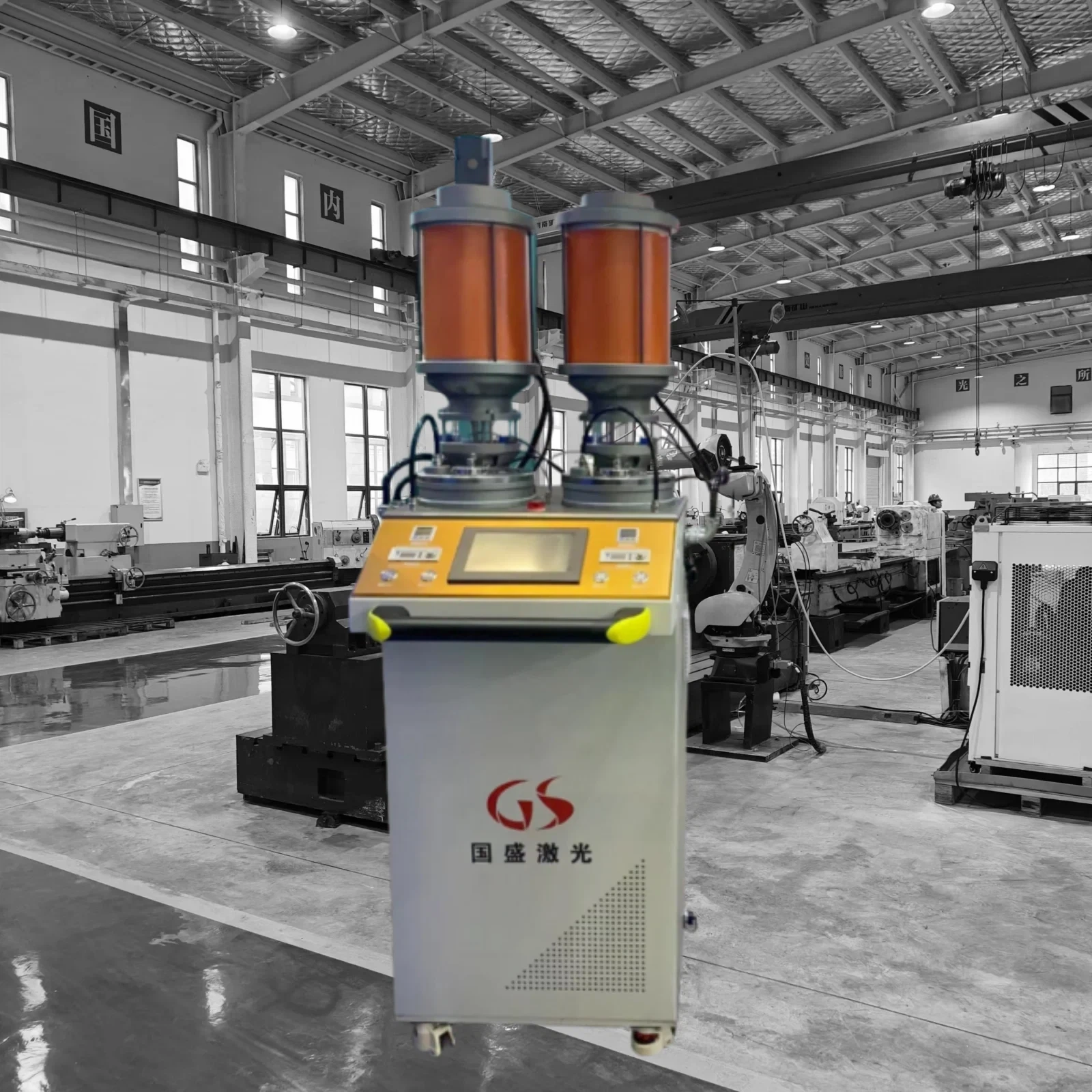
Powder Feeder

Laser Hardening Head
Driving High-Quality Development in the Auto Industry
In conclusion, laser hardening for automotive molds stands as a pivotal technology in modern automotive manufacturing. Thanks to its unique physical principles and significant engineering advantages, it plays a crucial role in improving component quality and extending mold life. Its characteristics of high precision, high efficiency, and environmental friendliness make it an ideal alternative to traditional heat treatment methods. As the future trends toward intelligence, composite processing, and green manufacturing emerge, and as the industry continues to explore new energy and lightweight materials, this cutting-edge technology is expected to assume an increasingly prominent role in future automotive manufacturing, continuously driving the auto industry toward high-quality transformation and upgrading.