

The Key to Performance Upgrade in High-End Manufacturing
As a core medium-carbon alloy structural steel in the engineering field, 40CrNiMo steel is widely used in the manufacture of key components such as heavy-duty gears and drive shafts. Its surface performance directly determines the service life of equipment. Relying on advantages such as precise temperature control and low deformation, laser surface hardening technology has become a core solution for improving the surface hardness and wear resistance of 40CrNiMo steel. This article will analyze the modification logic of laser surface hardening on 40CrNiMo steel from the dimensions of technical advantages, structure-performance correlation, process optimization, and application value, providing reference for material upgrading in the high-end manufacturing field.

Technological advantages highlighted: precise modification characteristics of laser surface quenching
Compared with traditional heat treatment processes, laser surface hardening shows significant advantages in the modification of 40CrNiMo steel. Its core lies in achieving local precise heating through a high-energy laser beam and completing rapid quenching relying on the self-cooling of the substrate, without the need for large-scale cooling devices. This technology can precisely control the hardened area, only treating the stressed surface layer of components, avoiding impact on the substrate performance, and greatly reducing the risk of deformation and cracking. At the same time, the hardened layer formed by laser quenching has excellent uniformity, which can effectively improve the surface hardness and wear resistance of the material, extend the service cycle of heavy-duty components, meet the core requirements of high-end equipment for lightweight and high-performance materials, and become one of the mainstream surface modification technologies in the current machinery manufacturing field.
Structure Evolution Logic: Core Intrinsic Mechanism of Performance Improvement
The performance improvement of 40CrNiMo steel by laser surface hardening essentially stems from the precise control of the surface microstructure. During the rapid heating and cooling process, significant martensitic transformation will occur on the material surface, forming a high-hardness, fine-grained martensitic structure, which is the core basis for the improvement of surface hardness. At the same time, the precise input of laser energy can achieve surface grain refinement, further optimizing the material's toughness and fatigue resistance, and reducing the probability of crack initiation. In addition, depending on the differences in process parameters, a small amount of retained austenite may remain on the surface, which can effectively improve the material's ductility and impact toughness, achieving a balance between hardness and toughness. This structure evolution mechanism enables 40CrNiMo steel to adapt to harsher cyclic load and abrasive working conditions.


Process Parameter Optimization: Key Link to Ensure Modification Effect
The modification effect of laser surface hardening on 40CrNiMo steel is highly dependent on the precise matching of process parameters. The core parameters include laser power, scanning speed, spot diameter, and cooling method: laser power and scanning speed determine the heat input, which need to be precisely matched to ensure sufficient austenitization of the surface layer and avoid overheating; spot diameter and scanning overlap rate affect the uniformity of the hardened layer, which need to be optimally designed according to the component size; the selection of cooling method (such as air cooling, water cooling, etc.) directly determines the effect of structure transformation, which needs to be adjusted according to the material thickness and service requirements. Experimental data show that when the laser power and scanning speed are matched, the surface hardness of 40CrNiMo steel can be increased from 30HRC to 60HRC, and the fatigue strength can be increased by 25%, indicating that parameter optimization is the key to achieving performance breakthrough.
Release of Application Value: Scenario Adaptation and Expansion in High-End Manufacturing
40CrNiMo steel modified by laser surface hardening has been widely applied in the core field of high-end equipment manufacturing. In the construction machinery field, the modified components such as drive shafts and gears have significantly improved wear resistance, with their service life extended by more than 50%; in the aerospace field, their lightweight and high fatigue resistance characteristics can meet the requirements of precision transmission components; in the new energy equipment field, they can satisfy the heavy-load and long-cycle service requirements of core components of wind power and photovoltaic equipment. In the future, with technological upgrading, laser surface hardening will also be integrated with processes such as additive manufacturing and multi-stage quenching to achieve gradient optimization of 40CrNiMo steel performance and further expand the application boundary in the high-end manufacturing field.

Laser equipment components

Fiber Laser Machine

Laser Cladding Head
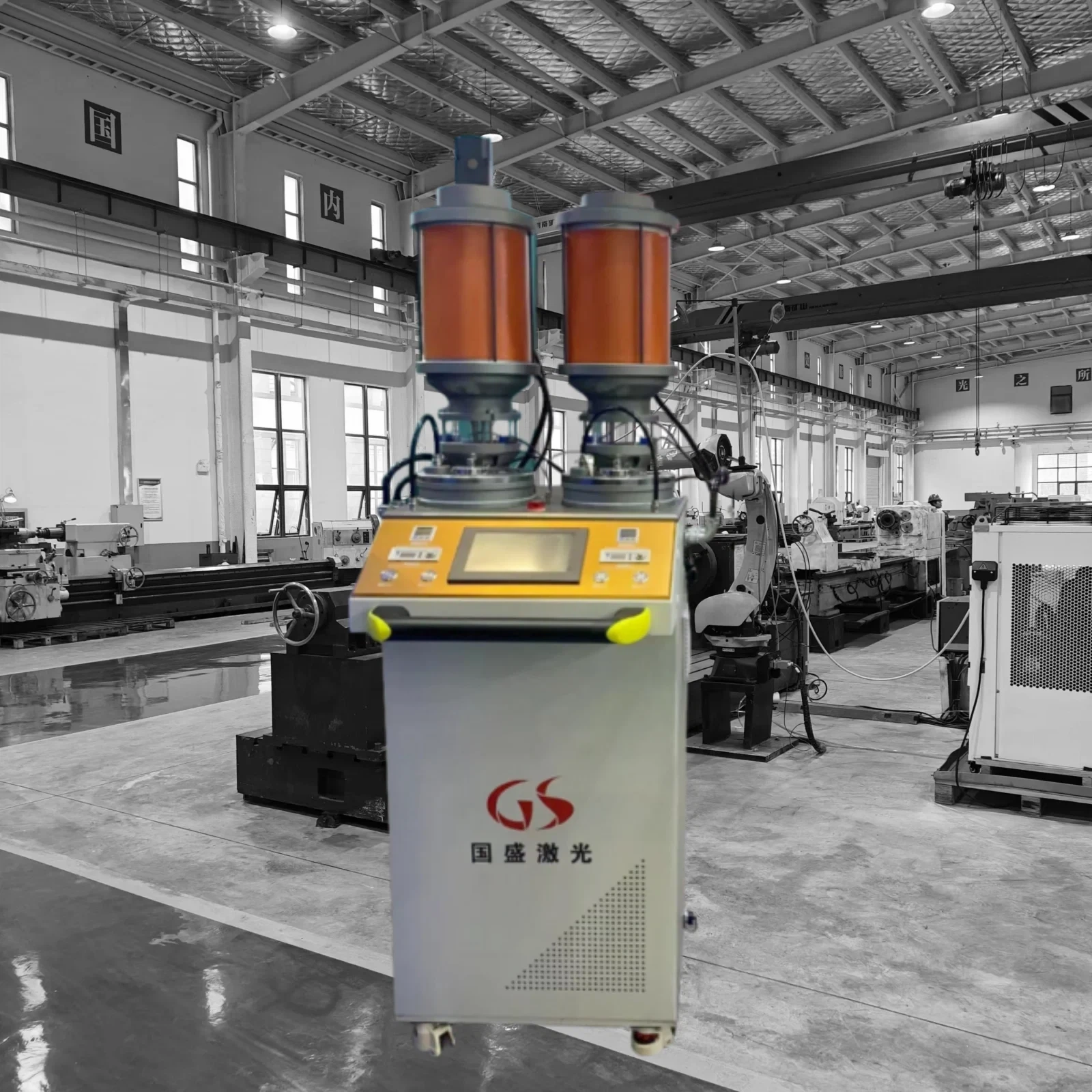
Powder Feeder

Laser Hardening Head
Laser Quenching Leads the New Trend of Material Upgrade
Laser surface hardening technology achieves the synergistic improvement of material hardness, wear resistance and fatigue resistance by precisely regulating the surface structure of 40CrNiMo steel, solving the problem of balancing deformation and performance that is difficult to achieve with traditional processes. Its characteristics of precise modification, low damage and high efficiency perfectly meet the core demand for material performance upgrading in high-end manufacturing. With the continuous optimization of process parameters and the integration and innovation of multiple technologies, this technology will further release the application potential of 40CrNiMo steel and promote the performance upgrading of equipment in fields such as construction machinery and aerospace. In the future, laser surface hardening is expected to become the mainstream solution for the modification of medium-carbon alloy structural steel, providing core material support for the high-quality development of the manufacturing industry.