

The Evolution of Roll Surface Treatment in Industrial Manufacturing
In modern heavy industries such as steel production and paper manufacturing, roll surfaces are the backbone of the production line. These critical components must withstand punishing operational environments characterized by extreme abrasive wear, high-temperature oxidation, and relentless mechanical stress. Traditional repair methods often struggle to provide a permanent solution, leading to frequent downtime and increased operational costs. Wide band laser cladding (WBLC) has emerged as a transformative additive manufacturing technology, offering a sophisticated method for surface hardening and restoration. By utilizing high-power laser systems to fuse specialized metallic powders like Cr12MoV onto the substrate, manufacturers can create a protective layer that significantly outperforms the original material. This article explores how wide band laser cladding serves as a cutting-edge solution for industrial roll maintenance, ensuring that equipment meets the rigorous demands of global manufacturing standards while maximizing the return on investment for high-value assets.

Technical Advantages of Wide Band Laser Cladding Systems
Wide band laser cladding represents a significant leap forward in directed energy deposition (DED) technology. Unlike conventional laser cladding, which uses a small, circular spot, WBLC employs a rectangular "wide band" beam. This architectural shift in the laser beam profile allows for a significantly larger coverage area per pass, which translates directly into enhanced processing efficiency and reduced lead times for large-scale industrial rolls. The wider beam ensures a more uniform heat distribution, which is critical for maintaining a consistent cooling rate across the clad layer. This precise thermal control results in a homogeneous microstructure with minimal dilution from the base metal. Furthermore, the optimized heat input of wide band systems minimizes the heat-affected zone (HAZ), effectively preventing thermal distortion and preserving the structural integrity of the roll core. For equipment producers, this technology offers a scalable and highly productive alternative to traditional thermal spray or arc welding processes.
Metallurgical Superiority of Cr12MoV Powder Coatings
The selection of Cr12MoV powder as the additive material is a strategic choice for high-load industrial applications. Cr12MoV is a high-carbon, high-chromium tool steel alloy renowned for its exceptional hardness and secondary hardening characteristics. When processed through a wide band laser cladding system, the rapid solidification creates a dense, pore-free coating that typically reaches hardness levels of 55-62 HRC. This high hardness is paired with an intricate distribution of chromium carbides, which provides a formidable barrier against abrasive wear. Despite its extreme hardness, the refined grain structure achieved through laser processing ensures that the coating retains sufficient toughness to resist delamination or cracking under cyclic loading. Additionally, the high chromium content offers robust corrosion resistance, protecting the roll surface from chemical degradation in humid or acidic environments. This unique metallurgical profile makes Cr12MoV the ideal consumable for extending the service life of critical rolling mill components.


Optimizing Processing Parameters for Maximum Durability
Achieving a high-quality metallurgical bond requires meticulous control over the laser processing parameters. For wide band laser cladding, the synergy between laser power, scanning speed, and powder flow rate determines the final quality of the surface. A stable powder feeding system is essential to ensure that the Cr12MoV particles are delivered uniformly into the molten pool, preventing thickness variations that could lead to uneven wear. Surface preparation also plays a vital role; rolls must be thoroughly cleaned and often pre-heated to specific temperatures to manage the thermal gradient and prevent interfacial stresses. By optimizing the overlap rate between cladding tracks, technicians can achieve a smooth, near-net-shape surface finish that requires minimal post-process grinding. These advanced additive manufacturing workflows allow for the precise restoration of dimensional accuracy, ensuring that the refurbished rolls meet the stringent tolerances required for high-speed industrial production lines while significantly reducing material waste and energy consumption.
Impact on Operational Efficiency and Service Life
The practical implementation of wide band laser cladding has delivered measurable performance gains across various sectors. Case studies from steel mills indicate that rolls treated with Cr12MoV cladding can see a service life extension of up to 400% compared to untreated or conventionally repaired surfaces. This longevity translates to fewer roll changes, reduced maintenance labor, and a substantial decrease in production downtime. In the paper manufacturing industry, the uniform surface quality provided by WBLC helps maintain consistent product thickness and surface finish, directly improving the quality of the final output. From an economic perspective, the ability to salvage and upgrade expensive rolls rather than replacing them offers a massive cost advantage. As industrial operators move toward "Green Manufacturing," the resource efficiency of laser additive manufacturing aligns with sustainability goals by reducing the carbon footprint associated with manufacturing new heavy-duty components. The result is a more resilient supply chain and a more profitable production environment.

Laser equipment components

Fiber Laser Machine

Laser Cladding Head
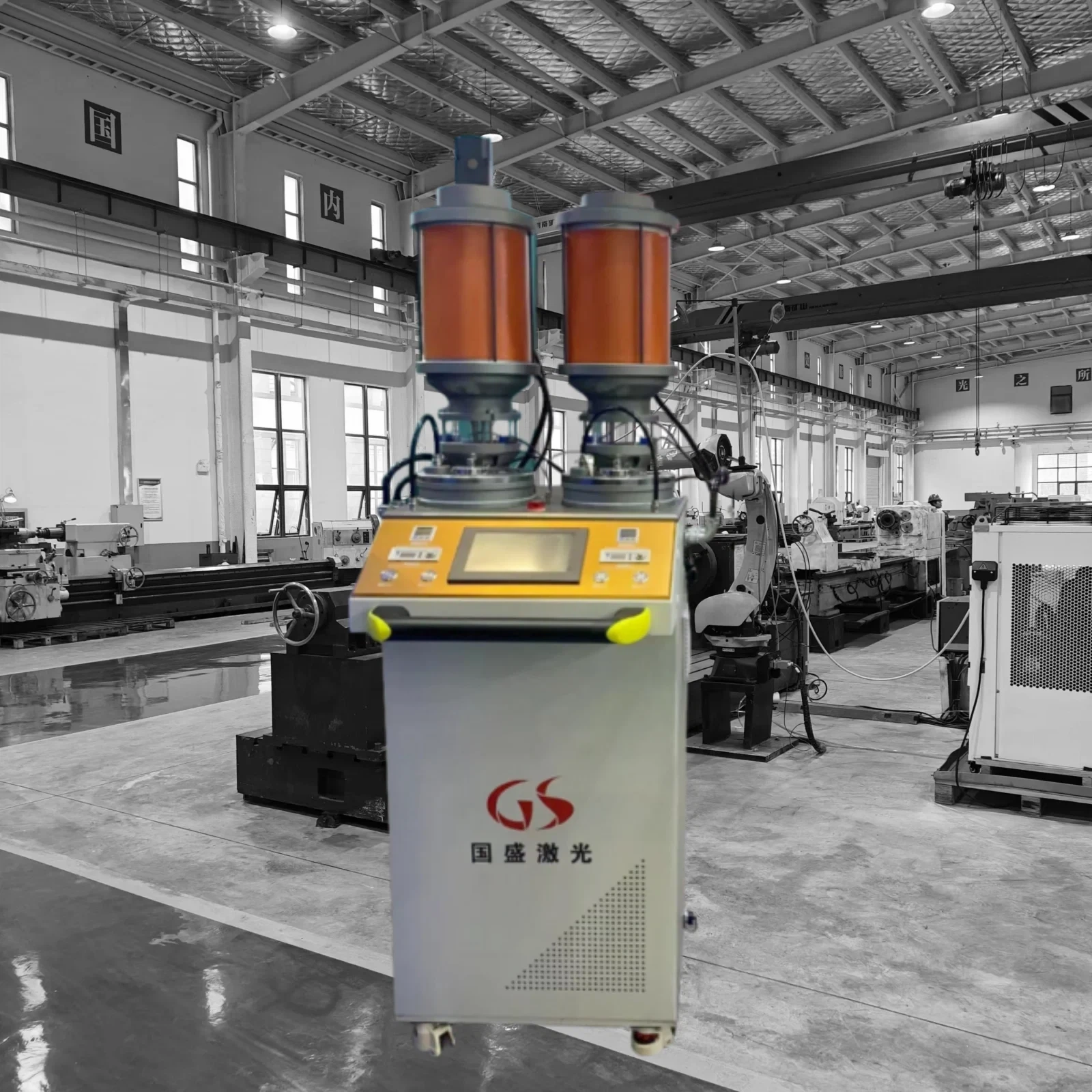
Powder Feeder

Laser Hardening Head
Future Perspectives in Laser Surface Engineering
As we look toward the future of industrial maintenance, wide band laser cladding remains at the forefront of surface engineering innovation. The integration of real-time monitoring systems and AI-driven parameter optimization is further refining the reliability of the cladding process. New alloy compositions and metal matrix composites (MMCs) are being developed to push the boundaries of wear and heat resistance even further. For manufacturers of laser additive manufacturing equipment, the focus is shifting toward providing turnkey solutions that include automated handling, integrated inspection, and data-driven maintenance scheduling. By adopting these advanced technologies, industries can move away from reactive repairs toward a proactive asset management strategy. Wide band laser cladding of Cr12MoV powder is not just a repair technique; it is a value-added manufacturing process that redefines the performance limits of industrial rolls. As global competition intensifies, the adoption of such high-efficiency, high-performance surface treatments will be a key differentiator for industry leaders worldwide.
FAQ
Q: Why is wide band laser cladding better than traditional welding for roll repair?
A: Wide band laser cladding offers a much lower heat input than traditional arc welding, which significantly reduces the Heat Affected Zone (HAZ) and prevents part distortion. It creates a superior metallurgical bond with minimal dilution, ensuring the Cr12MoV coating retains its full wear-resistant properties and hardness.
Q: Can Cr12MoV cladding be applied to any type of industrial roll?
A: Yes, it is highly effective for rolls made of cast iron, forged steel, and various alloy steels. It is widely used in steel rolling mills, paper calendars, and crushing rolls where a combination of high hardness (55-62 HRC) and excellent abrasive wear resistance is required to maintain dimensional stability.
Q: What are the key processing parameters for successful laser metal deposition?
A: The most critical parameters include laser power density, beam scanning speed, powder feed rate, and the overlap ratio between passes. Proper control of these factors ensures a dense, crack-free layer of Cr12MoV with a uniform surface finish that minimizes the need for extensive post-process machining.