

Core Significance and Overall Framework of Laser Cladding Effect Inspection
As a key repair and surface strengthening technology in fields such as machinery manufacturing, aerospace, and rail transit, the quality of laser cladding layers directly determines the service life, operational safety, and cost-effectiveness of components. Scientific evaluation of cladding effects requires establishing a three-dimensional system of "macro-micro-supplementary verification", combined with practical inspection indicators, to achieve comprehensive control from appearance to performance and from structure to service life. This article systematically breaks down the evaluation dimensions and inspection key points of laser cladding effects, providing a standardized reference for industry practitioners.

Macro Level: Core Evaluation of Intuitive Quality Indicators
Macroscopic quality is the basic guarantee of laser cladding effects, focusing on five core indicators: cladding track shape, surface roughness, defect status, and dilution rate. Cladding tracks should present a uniform banded or layered morphology, with the fluctuation range of width and height controlled within ±10%, avoiding segregation, uneven accumulation and other issues. Surface roughness directly affects subsequent processing efficiency; the general industry standard requires Ra≤6.3μm, and key precision components need to reach Ra≤3.2μm. Cracks and pores are fatal defects, which should be confirmed through visual inspection, penetrant testing or ultrasonic flaw detection: no through cracks longer than 0.5mm are allowed, and the porosity should be less than 2%. As a key parameter connecting the base material and the coating, the ideal dilution rate ranges from 5% to 15%. Too low a rate may lead to poor bonding, while too high a rate will dilute the alloy composition of the coating and reduce the expected performance.
Micro Level: In-depth Verification of Structure and Performance
The microstate determines the core performance of the laser cladding layer, which needs to be verified through metallographic analysis, hardness testing, wear/corrosion resistance tests and other methods. High-quality cladding layers should form a uniform and refined microstructure without coarse grains, brittle phases or inclusion defects. For example, iron-based alloy cladding layers should present a martensite/bainite composite structure, and nickel-based alloys should avoid the formation of Laves phases. In terms of performance, it is necessary to meet the requirements according to working conditions: the hardness should be more than 30% higher than that of the base material in wear-resistant scenarios, and it should pass the neutral salt spray test (no obvious rust for ≥500 hours) in corrosive environments. The metallurgical bonding state of the transition layer is crucial; it is necessary to ensure that there are no pores or oxide films at the interface between the base material and the coating, the bonding strength is ≥350MPa, and its bonding reliability is verified through tensile tests or impact tests.

Supplementary Verification: Key Role of Element Distribution and Service Life Evaluation
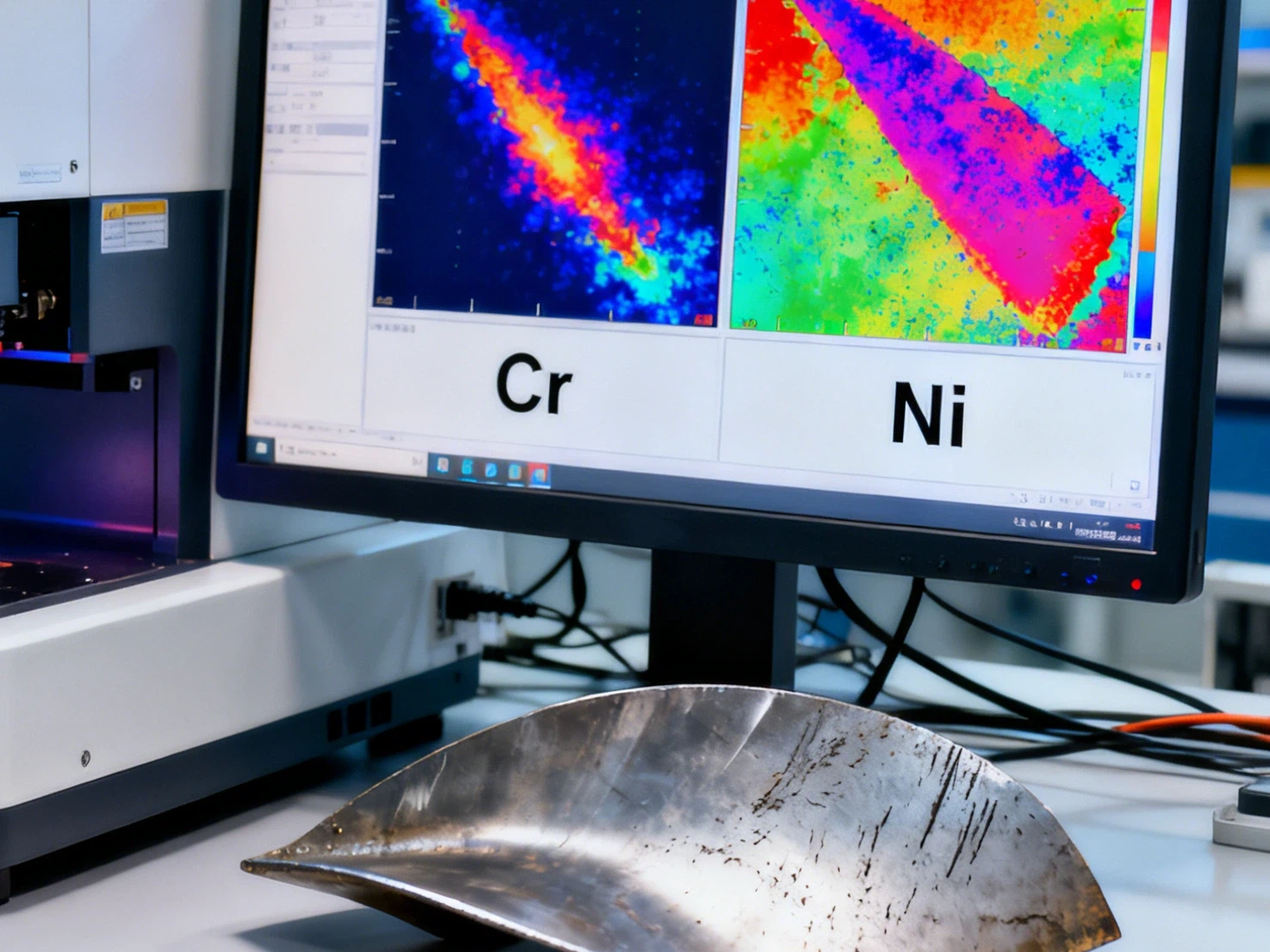
The type and distribution uniformity of chemical elements directly affect the composition stability of the cladding layer. Energy Dispersive Spectroscopy (EDS) or X-ray Fluorescence Spectroscopy (XRF) should be used for detection to ensure that the distribution deviation of alloy elements (such as Cr, Ni, Mo, etc.) is ≤5%, avoiding performance fluctuations caused by local composition imbalance. As the core area of metallurgical bonding, the transition layer needs to focus on analyzing its element diffusion to ensure the formation of a continuous diffusion layer (thickness 50-100μm), eliminating mechanical bonding or semi-metallurgical bonding. For key components such as aero-engine blades and shield machine cutters, quality and service life testing should also be carried out. Fatigue tests, high-temperature aging tests and other methods are used to simulate actual working conditions, verifying that the service life of the cladding layer is not less than 80% of the design life of the base material, ensuring long-term operational stability.
Practical Inspection: Key Control Points in Production Scenarios
Practical inspection indicators are directly related to production efficiency and mass production consistency, focusing on four core points. Powder feeding stability should be verified by the weighing method or laser powder meter, with the powder feeding rate fluctuation ≤±3% to ensure the uniformity of cladding layer thickness (deviation ≤±0.1mm). Powder utilization rate is the key to cost control; the reasonable industry range is 60%-85%, and the utilization rate can be improved by optimizing the powder feeding angle and laser power parameters. In the scenario of rapid cladding, the workpiece deformation should be strictly controlled within the assembly tolerance range (usually ≤0.2mm/m), and thermal stress deformation should be reduced through preheating treatment, segmented cladding and other processes. Defect detection should combine multiple methods: visual inspection for obvious surface cracks and pores, penetrant testing for fine surface defects, and ultrasonic flaw detection for internal buried defects to ensure no omissions.

Laser equipment components

Fiber Laser Machine

Laser Cladding Head
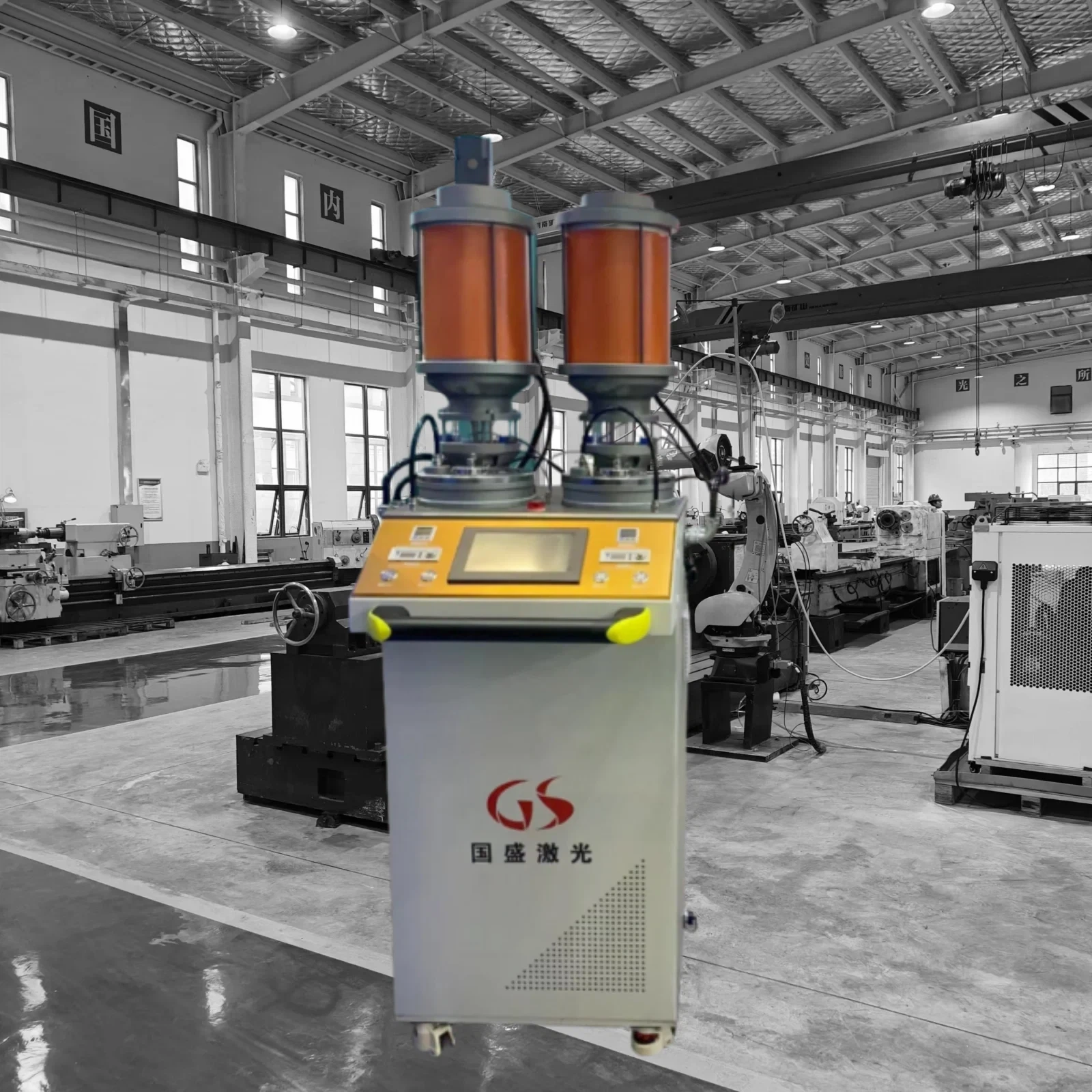
Powder Feeder

Laser Hardening Head
Building a Comprehensive Quality Control System for Laser Cladding
The evaluation and inspection of laser cladding effects need to run through the entire process of "macro appearance-micro structure-supplementary verification-practical implementation". Macro indicators ensure basic qualification, micro structure determines core performance, supplementary verification improves long-term reliability, and practical key points ensure production feasibility. Only by establishing a multi-dimensional and multi-level inspection system can problems such as cracks, poor bonding, and substandard performance be effectively avoided, and the advantages of laser cladding technology in component repair and strengthening be fully exerted. In the future, with the upgrading of detection technology, laser cladding quality control will develop in the direction of intelligence and high precision, providing more reliable technical support for high-end equipment manufacturing.