

Metallurgical Bonding Empowers Equipment Upgrading and Resource Optimization
Laser cladding technology is an efficient surface modification and repair process. It adds cladding materials to the substrate surface and uses a high-energy-density laser beam to achieve metallurgical bonding between the materials and the substrate surface layer, forming a high-performance cladding layer. Boasting dual values of surface strengthening and equipment repair, this technology is widely applicable in multiple fields such as industrial manufacturing, energy and power, military equipment, and mechanical remanufacturing. It can not only extend the service life of key equipment but also prepare high-performance alloy layers on low-cost substrates, reducing manufacturing costs and consumption of rare materials. Currently, China's laser cladding technology has entered the intermediate stage of industrial application, becoming one of the core technologies driving the green upgrading of manufacturing and resource recycling. However, the industrialization process still faces multiple challenges that urgently require technological breakthroughs and system improvement.

Core Advantages: Dual Breakthroughs in Economy and Functionality
The core competitiveness of laser cladding technology stems from its dual breakthroughs in economy and functionality, providing a low-cost and high-performance solution for the manufacturing industry. In terms of economy, the technology does not require the overall use of precious alloy materials. By only cladding a special alloy layer on the surface of ordinary substrates, it can achieve special properties such as wear resistance, corrosion resistance, and high-temperature resistance, significantly reducing equipment manufacturing costs. Meanwhile, it reduces the consumption of rare metals such as nickel and cobalt, aligning with the concept of resource-saving development. In terms of functionality, the cladding layer forms a strong metallurgical bond with the substrate, avoiding the defects of easy peeling and insufficient bonding force of traditional coatings. It can accurately repair worn and corroded key components, enabling old equipment to restore or even exceed its original performance, significantly reducing equipment replacement frequency and operation and maintenance costs, and creating considerable economic benefits for industrial enterprises.
Material System: Specialized Additive Materials and Evaluation Standards Are Key to Promotion
The imperfection of the laser cladding material system is the primary bottleneck restricting the large-scale application of the technology. Currently, the number of specialized additive material systems for laser cladding on the market is limited, lacking customized material solutions for different industry scenarios. It is difficult to meet the personalized needs such as corrosion resistance in the energy field, high-temperature resistance in the military field, and wear resistance in the mechanical field. More importantly, there is no complete and unified quality evaluation index for cladding layers in the industry. The determination of core properties such as bonding strength, hardness uniformity, and defect rate lacks clear standards, resulting in uneven product quality and insufficient confidence in enterprise applications. Only by accelerating the development of specialized additive material systems adapted to diverse scenarios and establishing quality evaluation standards covering the entire process of production, inspection, and application can we remove obstacles for the promotion of laser cladding technology and realize optimal resource allocation.


Cost Dilemma: High Processing Costs Restrict Enterprise Acceptance
Although the cost of the core consumable for laser cladding-cladding powder-is relatively low, the problem of high overall processing costs still plagues the industry's development. Laser cladding equipment consumes high energy, the process debugging is complex, and the training cost of professional operation and maintenance personnel is relatively high, leading to the high actual processing cost of a single product. This situation makes most laser processing enterprises hesitate. They not only have low acceptance of high costs but also have doubts about the long-term performance stability of cladding products, forming an awkward situation where "the technical advantages are significant but the market penetration rate is insufficient." Cost control has become the core key direction for the marketization of laser cladding technology. It is necessary to reduce the unit processing cost through equipment upgrading, process optimization, and large-scale production, so as to enhance the market competitiveness of the technology.
Application Shortcomings: Disconnection Between Industry, Academia and Research and Engineering Challenges to Be Addressed
The application level and scale of laser cladding technology have not yet met market demand. The core crux lies in the disconnection between industry, academia and research and the weakness of engineering technology. Current technological research is mostly concentrated in the field of materials science, focusing on the optimization of cladding material composition. However, the applied basic research targeting actual engineering objects is relatively scarce. For example, in the process of large-area laser cladding, due to the process characteristics of "high temperature and rapid cooling," the cladding layer is prone to stress concentration and cracks, which seriously affect the reliability of components. This technical pain point has not been completely solved so far. In addition, the laboratory achievements of universities and research institutes are difficult to quickly transform into engineering solutions needed by enterprises, leading to the disconnection between technological research and development and market demand, and the application scale is difficult to achieve breakthrough growth.

Laser equipment components

Fiber Laser Machine

Laser Cladding Head
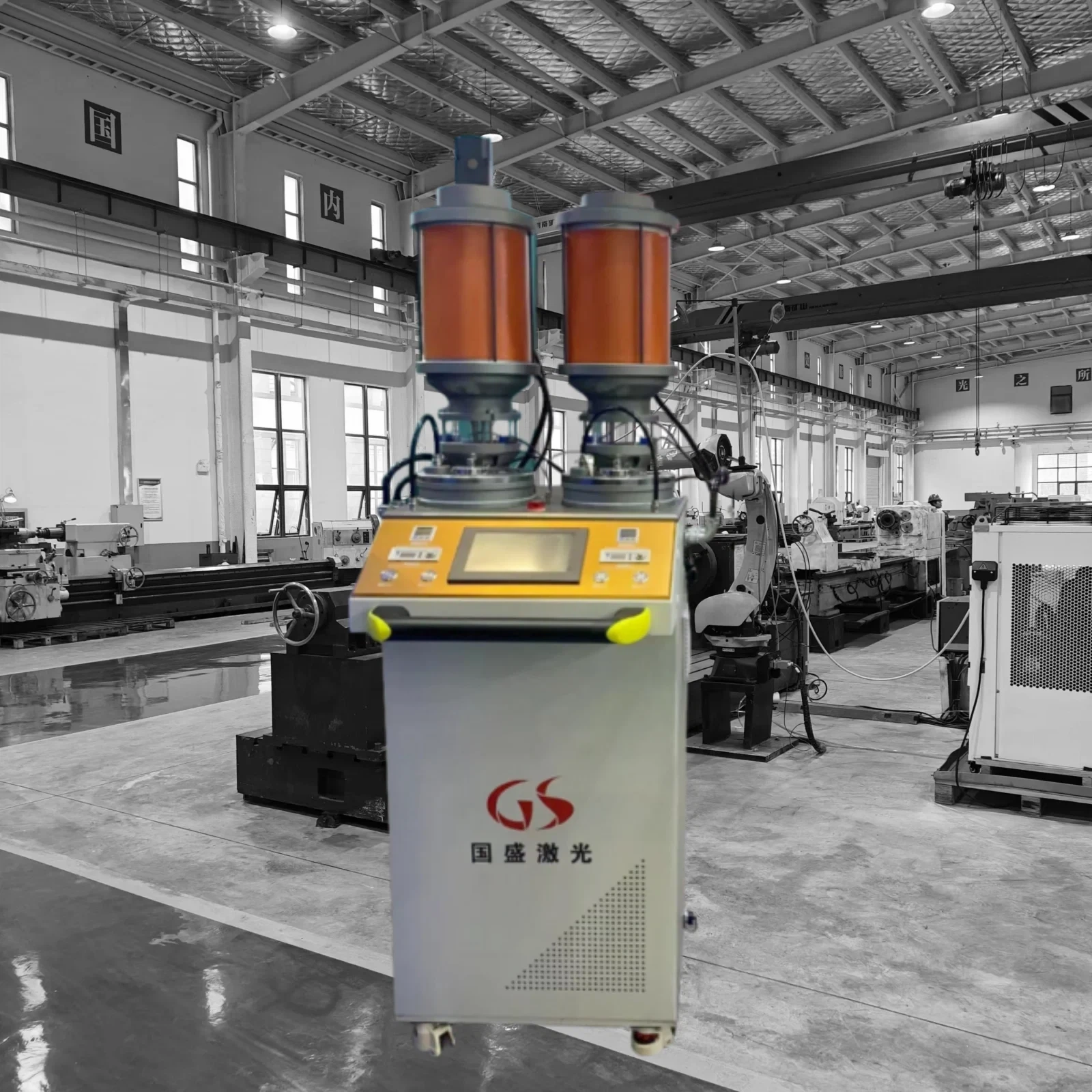
Powder Feeder

Laser Hardening Head
Breaking Through Full-Chain Barriers to Unleash Industrialization Potential
With its unique economy and functionality, laser cladding technology has irreplaceable value in industrial upgrading and resource recycling, and has broad market prospects. However, the current three major bottlenecks, such as the imperfect material system, high processing costs, and insufficient application adaptation, as well as the industry status of disconnection between industry, academia and research, restrict the industrialization process of the technology. In the future, it is necessary to accelerate the research and development of specialized additive material systems and the establishment of quality standards based on market demand. Reduce processing costs through technological innovation, strengthen the collaborative research of industry, academia and research, and solve engineering application problems. Only by breaking through the full-chain barriers of "material research and development-equipment optimization-process upgrading-market application" can laser cladding technology truly become the core engine driving the high-quality development of the manufacturing industry and achieve large-scale implementation in more industrial scenarios.