

The Inevitable Fit Between Agricultural Mechanization Growth and Technological Innovation
China's agricultural mechanization rate hit 74% in 2022, making agricultural mechanization and automation the core drivers of modern agricultural development. However, farm machinery operates under heavy loads in harsh field environments year-round, leading to frequent failures of key wear-resistant cutting tools-such as rotary tiller blades, harvester cutterheads, and ditchers-due to poor lubrication, impurity intrusion, external impacts, and corrosion from fertilizers or pesticides. The traditional "disassembly and replacement" maintenance mode for agricultural machinery parts not only hikes operational costs for manufacturers and farmers but also hinders the widespread adoption of agricultural mechanization. In this context, laser cladding technology has emerged as a game-changing solution, leveraging precise repair and efficient surface strengthening to address farm machinery parts failure. This article explores the pain points of agricultural machinery parts wear, laser cladding's working principle, core advantages, surface pretreatment processes, and its role in revolutionizing farm machinery maintenance and agricultural mechanization efficiency.
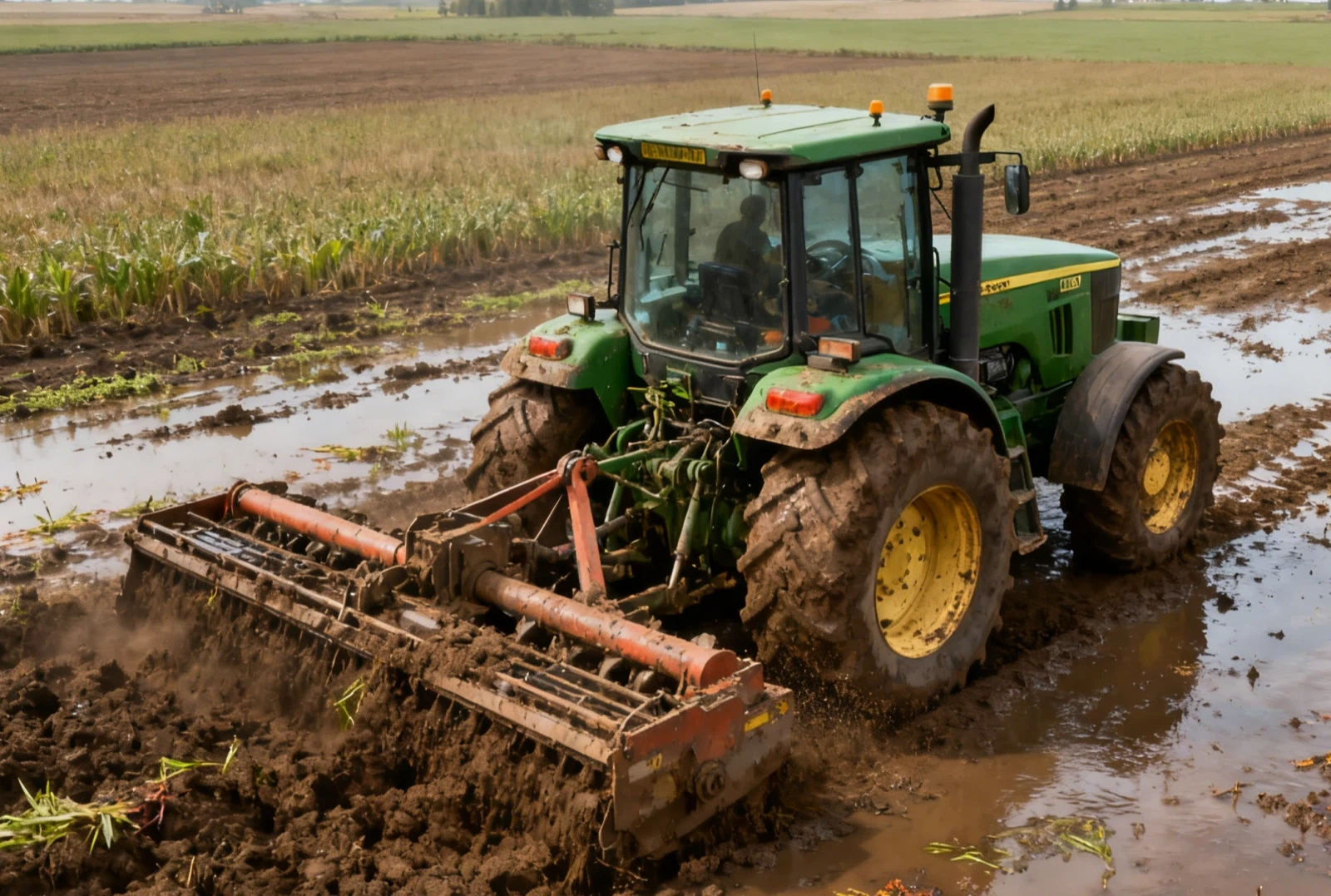
Parts Failure Limits Production Efficiency
The large-scale promotion of agricultural mechanization in China has raised the bar for farm machinery's production efficiency and operational stability. Yet, the harsh working conditions-exposure to soil, moisture, chemical residues, and continuous heavy-duty operation-make agricultural machinery parts highly susceptible to wear, corrosion, and fracture. Key wear-resistant components like rotary tiller blades and harvester cutting tools are particularly prone to failure, which not only causes unplanned downtime and increases farm machinery maintenance costs but also disrupts agricultural production schedules. Worse, most current maintenance practices for farm machinery still rely on simple parts replacement, resulting in resource waste and soaring operational costs for agricultural machinery enterprises. This inefficiency has become a critical bottleneck for high-quality agricultural mechanization popularization, creating an urgent demand for cost-effective, efficient parts repair and surface strengthening technologies like laser cladding for agricultural equipment.
Core Logic for Agricultural Machinery Parts Repair and Surface Strengthening
As an advanced substrate surface modification technology, laser cladding offers a revolutionary approach to repairing and strengthening agricultural machinery parts. Its core mechanism involves pre-programming a cladding path, then using high-energy laser irradiation to rapidly melt cladding materials and the surface layer of farm machinery components, forming a molten pool. This pool solidifies quickly to create a low-dilution cladding layer with metallurgical bonding to the base material-ensuring exceptional adhesion. Laser cladding serves two key purposes for agricultural applications: in-situ repair of damaged farm machinery parts, accurately restoring their original dimensions and performance to avoid costly full replacements; and surface strengthening of new components, significantly enhancing wear resistance, corrosion resistance, heat resistance, and oxidation resistance of agricultural parts. This dual "repair + strengthening" capability perfectly aligns with the durability and reliability needs of farm machinery operating in harsh conditions.


Core Competitiveness of Laser Cladding vs. Traditional Processes for Agricultural Machinery
Compared to traditional processing and maintenance methods, laser cladding technology boasts five irreplaceable advantages for agricultural machinery parts. First, the metallurgical bonding between the cladding layer and the base material delivers far higher adhesion than conventional coatings, eliminating the risk of peeling during farm machinery operation. Second, laser heating is highly concentrated, minimizing thermal impact on the substrate-this prevents deformation of agricultural machinery parts, ensuring precise assembly post-repair. Third, the low dilution rate of the cladding layer reduces consumption of expensive specialty cladding materials, cutting overall farm equipment maintenance costs. Fourth, cladding layer thickness is precisely controllable, allowing customized repair or strengthening solutions for different wear levels and types of agricultural parts. Finally, laser cladding can target specific worn areas and complex, irregular structures of farm machinery components that are hard to reach with traditional technologies, making it highly adaptable to diverse agricultural equipment needs.
The Critical Precondition for High-Quality Laser Cladding on Agricultural Parts
The effectiveness of laser cladding for agricultural machinery parts depends on a scientific, standardized surface pretreatment process. Farm machinery components accumulate soil, oil stains, moisture, chemical fertilizer residues, rust, and oxide layers during field operation-any residual contaminants will cause defects like pores or inclusions in the cladding layer, compromising bonding strength and service life. Pretreatment follows the principle of "layer-by-layer cleaning and precise impurity removal." First, rinse soil-contacting parts with water to remove loose dirt. Second, use laser cleaning technology to eliminate stubborn contaminants such as hardened oil and thick rust, a key step for farm components with heavy fouling. Third, polish the cladding surface with sandpaper to improve flatness and remove fine residues. Finally, perform deep cleaning with acetone to ensure no impurities remain-this critical step guarantees the quality and performance of the laser cladding layer for agricultural machinery parts.

Laser equipment components

Fiber Laser Machine

Laser Cladding Head
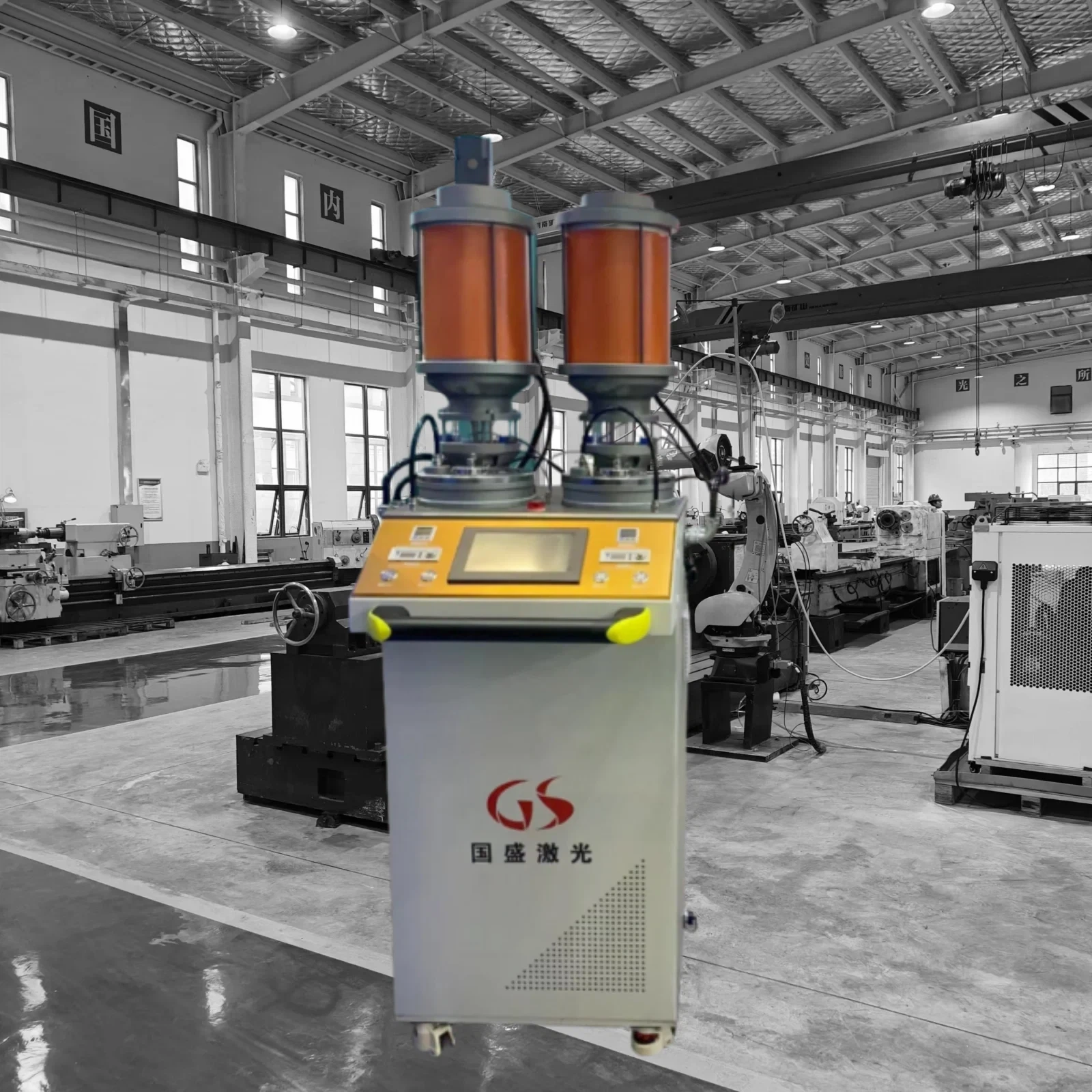
Powder Feeder

Laser Hardening Head
Laser Cladding Transforms Farm Machinery Maintenance Modes
Amid the shift toward efficient, energy-saving, and sustainable agricultural mechanization, laser cladding technology is driving a paradigm shift in farm machinery maintenance. It addresses the drawbacks of traditional "high-cost, low-efficiency, resource-wasting" replacement-based maintenance by extending the service life of agricultural machinery parts through in-situ repair, reducing operational costs for manufacturers and usage costs for farmers. Additionally, its surface strengthening capability boosts farm machinery reliability and operational stability, directly enhancing agricultural production efficiency. As laser cladding technology matures and becomes more accessible, it will further transform farm machinery maintenance from "passive replacement" to "proactive strengthening" and "precision repair." This innovation provides solid technical support for the widespread adoption of agricultural mechanization and the development of modern agriculture in China. In the future, laser cladding is expected to see large-scale application across more types of agricultural machinery components, unlocking greater value for the sustainable growth of the agricultural sector.