

Laser Welding: An Overview of Definition and Significance
Laser Welding is a precision joining technology that uses a highly concentrated laser beam as the heat source to melt and fuse materials. Unlike traditional welding methods, it leverages the coherence, monochromaticity, and high energy density of lasers to achieve fast, accurate, and low-distortion bonds. Widely adopted in aerospace, automotive, electronics, and medical device industries, Laser Welding has become a cornerstone of modern manufacturing due to its ability to handle diverse materials-from metals like steel and aluminum to advanced composites. Its core advantage lies in minimizing heat-affected zones (HAZ), ensuring structural integrity while boosting production efficiency.
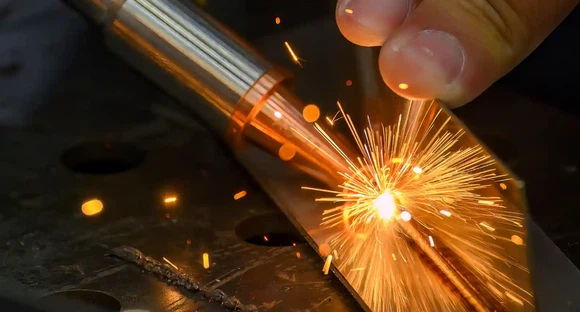
The Fundamental Principle: How Laser Welding Operates
At its core, Laser Welding works by converting electrical energy into a focused laser beam via a laser oscillator. The beam travels through optical components (lenses or fiber optics) to concentrate energy onto a tiny spot (typically 0.1–1 mm in diameter) on the workpiece surface. This intense energy (up to 10^6 W/cm²) rapidly heats the material, causing it to melt and form a molten pool. As the laser beam moves along the joint line, the molten metal solidifies, creating a continuous weld seam. Key to its function is energy absorption: materials absorb laser energy based on their optical properties, with reflectivity influencing welding parameters like power and speed. For reflective metals (e.g., copper), specialized lasers or surface treatments enhance absorption, ensuring effective fusion.
Core Components of a Laser Welding System
A standard Laser Welding system comprises four critical components. First, the laser source (e.g., fiber laser, CO₂ laser, or Nd:YAG laser) generates the beam-fiber lasers are favored for their high efficiency and compact design. Second, optical delivery systems (fibers, mirrors, focusing lenses) guide and concentrate the laser. Third, workpiece positioning equipment (robots, fixtures) ensures precise alignment of the joint with the laser beam. Finally, process monitoring tools (cameras, sensors) track weld quality in real time. Together, these components enable the repeatability and precision that define Laser Welding, adapting to both small-scale micro-welding and large-scale industrial applications.

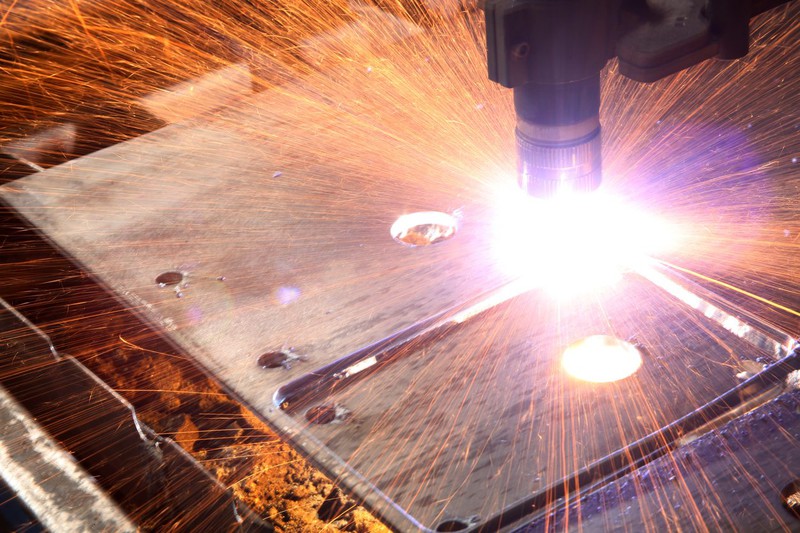
Key Characteristics That Set Laser Welding Apart
Laser Welding stands out for four primary traits. First, high energy density allows deep penetration with minimal heat input, reducing material distortion and preserving mechanical properties. Second, precision enables narrow weld seams (as thin as 0.05 mm) and accurate placement, ideal for micro-components like electronics. Third, speed-welding rates can reach meters per minute, outperforming TIG or MIG welding for high-volume production. Fourth, versatility: it works with dissimilar materials (e.g., steel-aluminum joints) and complex geometries, from flat sheets to 3D-printed parts. Additionally, Laser Welding produces clean, spatter-free welds, reducing post-processing needs and lowering production costs.
Practical Applications Across Industries

Conclusion: The Future of Laser Welding
In summary, Laser Welding is a transformative joining technology defined by its precision, efficiency, and versatility. By focusing high-energy laser beams to melt and fuse materials, it addresses the limitations of traditional welding, delivering superior weld quality and production flexibility. As technology advances-with improvements in laser sources (e.g., ultrafast lasers), automation, and AI-driven process control-Laser Welding will expand into new industries, from renewable energy (solar panel assembly) to additive manufacturing (3D printing post-processing). Its role in enabling lighter, stronger, and more complex products positions it as a key driver of innovation, shaping the future of manufacturing for years to come.