

Unlocking the Potential of Predictive Manufacturing
In the high-stakes world of advanced laser additive manufacturing, achieving flawless results in laser metal deposition for turbine blade repair or high-performance coating applications requires more than just advanced equipment. It demands precise foresight. This is where sophisticated modeling and simulation become indispensable tools. By creating accurate digital twins of the laser cladding process, engineers can virtually test parameters, predict outcomes, and optimize the entire workflow before any physical material is deposited. This article explores how computational modeling for laser cladding is revolutionizing predictive quality control, reducing development costs, and enabling the reliable production of complex industrial components for aerospace, automotive, and energy sectors.

The Critical Role of Simulation in Process Optimization
The core value of laser cladding simulation lies in its ability to deconstruct and analyze the complex multi-physics phenomena occurring during deposition. Key process parameters such as laser power, scanning speed, and powder feed rate interact in real-time, directly influencing the melt pool geometry, thermal gradients, and final material properties. Advanced finite element analysis (FEA) software allows engineers to model these interactions with high fidelity. By running virtual DOE studies, they can identify the optimal parameter window to minimize residual stress, prevent defects like porosity or cracking, and ensure a defect-free clad layer with the desired microstructure, thereby achieving consistent results in applications from hardfacing drill bits to repairing hydraulic piston rods.
Core Elements of an Effective Cladding Simulation Model
A robust predictive model for the laser cladding process integrates several critical computational domains. First, thermal dynamics modeling accurately simulates heat transfer from the laser beam into the metallic powder and substrate, predicting temperature distribution and cooling rates crucial for phase transformations. Second, powder flow and melting behavior simulation examines how particle size, morphology, and carrier gas flow affect deposition efficiency and layer uniformity. Finally, metallurgical transformation modeling forecasts the solidification sequence, grain growth, and ultimate mechanical properties of the deposited material, whether it's a cobalt-based superalloy for exhaust valves or a stainless-steel coating for corrosion protection in marine environments.


Validating Models with Experimental Data and Material Science
The credibility of any simulation hinges on rigorous validation against empirical data. In laser cladding, this involves calibrating models with experimental results from actual LMD machine runs. Key validation metrics include melt pool dimensions captured via high-speed imaging, thermal history data from embedded thermocouples, and post-process microstructural analysis (e.g., grain size, hardness profiles). Accurate input of material properties-such as the thermal conductivity of Inconel 718 or the absorption coefficient of titanium powder-is paramount. This synergy between computational prediction and physical verification, supported by case studies in academic and industrial research, creates a reliable digital foundation for process qualification and certification, especially for mission-critical aerospace component repairs.
The Future Powered by AI and Integrated Multi-Physics Tools
The frontier of laser cladding simulation is rapidly advancing through integration and intelligence. The most significant trend is the move towards fully coupled multi-physics simulations that simultaneously solve thermal, fluid, structural, and electromagnetic equations, providing a holistic view of the process. Furthermore, machine learning algorithms are being deployed to analyze vast datasets from in-situ monitoring systems-such as melt pool cameras and pyrometers-enabling real-time adaptive control and closed-loop feedback. This AI-driven approach allows laser cladding systems to automatically compensate for disturbances, moving beyond prediction to active, intelligent process control for additive manufacturing of large-scale industrial parts.

Laser equipment components

Fiber Laser Machine

Laser Cladding Head
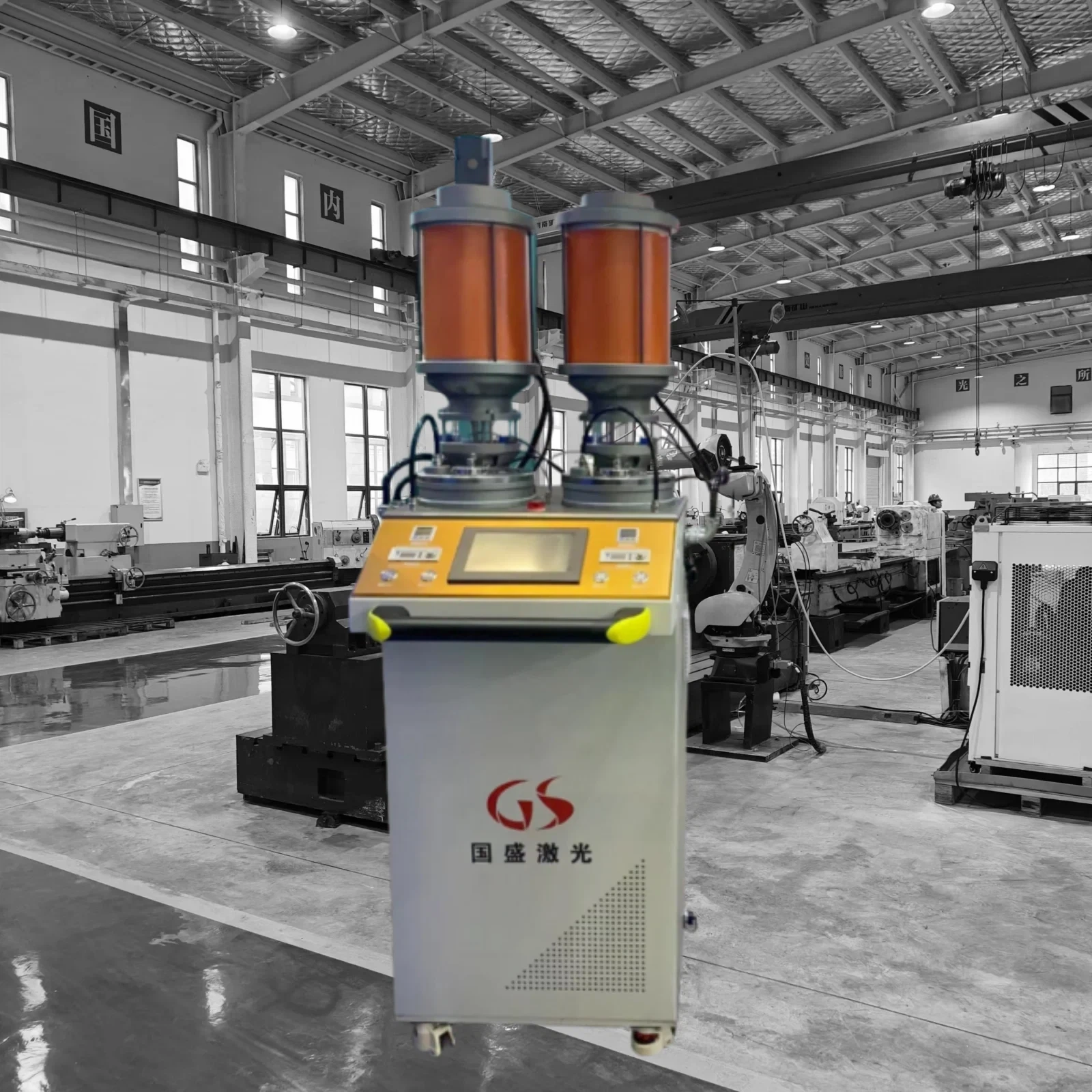
Powder Feeder

Laser Hardening Head
Building Certainty into Every Layer
In conclusion, modeling and simulation have transitioned from research tools to core pillars of industrial laser cladding operations. They provide the essential predictive control needed to ensure repeatability, quality, and cost-effectiveness in demanding applications from gearbox shaft refurbishment to applying wear-resistant coatings on forging dies. By leveraging advanced computational techniques, including data-validated thermal models and AI-enhanced optimization, manufacturers can significantly de-risk the adoption of laser-directed energy deposition technology. This digital thread not only accelerates innovation but also paves the way for its expanded use in serial production across the manufacturing landscape, solidifying its role in the future of smart, precision manufacturing.
FAQ
Q: What is the main purpose of using simulation in laser cladding?
A: The primary purpose is to achieve predictive process control and optimization. Simulation allows engineers to virtually test laser power, scanning speed, and powder feed settings to prevent defects, ensure optimal microstructure, and guarantee part quality before actual production, saving significant time and material costs.
Q: What are the key elements modeled in a laser cladding simulation?
A: A comprehensive simulation integrates thermal dynamics (heat flow and cooling rates), powder delivery and melting behavior, and metallurgical transformations during solidification. This multi-physics approach is crucial for predicting the final properties of the clad layer in additive manufacturing repairs and coatings.
Q: Which industries benefit most from advanced laser cladding modeling?
A: Industries with high-value, precision components benefit most, notably aerospace (for turbine blade repair), oil & gas (for coating drill strings), and automotive (for hardening engine parts). Simulation ensures the reliability required for these critical applications using laser metal deposition processes.