

Introduction to Advanced Laser Welding Technology
Laser welding stands as a cornerstone of modern high-precision manufacturing, utilizing a concentrated beam of coherent light to create strong, clean, and precise joints. This process is fundamental not only for traditional fabrication but also complements advanced laser additive manufacturing techniques. By delivering intense, localized heat, it minimizes the heat-affected zone (HAZ), reduces part distortion, and enables the joining of complex geometries and dissimilar materials. Its superiority in speed, accuracy, and repeatability makes it indispensable across industries where performance is critical, from aerospace to medical device production. This article explores the core principles, applications, and integration of laser welding within advanced manufacturing workflows.

The Fundamentals of Laser Welding Explained
At its core, laser welding is a fusion process where the energy of a focused laser beam melts and fuses materials. The type of laser source is crucial. Fiber lasers are predominant in industrial settings due to their high efficiency, excellent beam quality, and reliability, making them ideal for welding stainless steel, titanium alloys, and aluminum. The process is highly controlled via key welding parameters like laser power, pulse frequency, and travel speed. Unlike arc welding, the laser's energy is delivered optically, allowing for non-contact processing. This results in exceptionally narrow, deep welds with superior mechanical properties, making it perfect for sheet metal welding and intricate components where thermal distortion must be minimized.
Applications in Aerospace and High-Tech Industries
The aerospace sector heavily relies on laser welding systems for assembling critical components. It is essential for joining thin-walled aerospace components like fuel injectors, turbine blades, and structural elements made from heat-sensitive superalloys. The ability to produce hermetic seals and high-strength welds on materials like titanium alloys and Inconel is vital for safety and performance. Beyond aerospace, this technology is key in medical device manufacturing for creating sealed, biocompatible joints in implants and surgical tools, and in the automotive industry for manufacturing battery packs and powertrain elements in electric vehicles, ensuring durability and reliability.


Synergy with Laser Additive Manufacturing
Laser welding technology shares a deep synergy with laser additive manufacturing (LAM) processes like powder bed fusion. In many additive manufacturing systems, a high-power fiber laser is the core energy source for both building layers and performing post-processing welds. Furthermore, laser welding is critical for assembling larger structures from 3D-printed sub-components or for repair and cladding operations. This integration allows for the creation of complex, hybrid parts that leverage the design freedom of additive manufacturing with the structural integrity of high-performance welds, pushing the boundaries of component design and lifecycle management.
Future Trends and Process Integration
The future of laser welding points towards greater automation and intelligent integration. The rise of hybrid laser welding, which combines a laser with an arc process, is gaining traction for joining thicker materials with improved gap-bridging capability. Robotic laser welding cells with real-time seam tracking and adaptive control are becoming standard, enhancing consistency for high-volume production. Furthermore, its role is expanding within the additive manufacturing workflow, not just for part assembly but also for in-situ monitoring and closed-loop control of the welding process itself, ensuring every weld meets stringent quality standards automatically.

Laser equipment components

Fiber Laser Machine

Laser Cladding Head
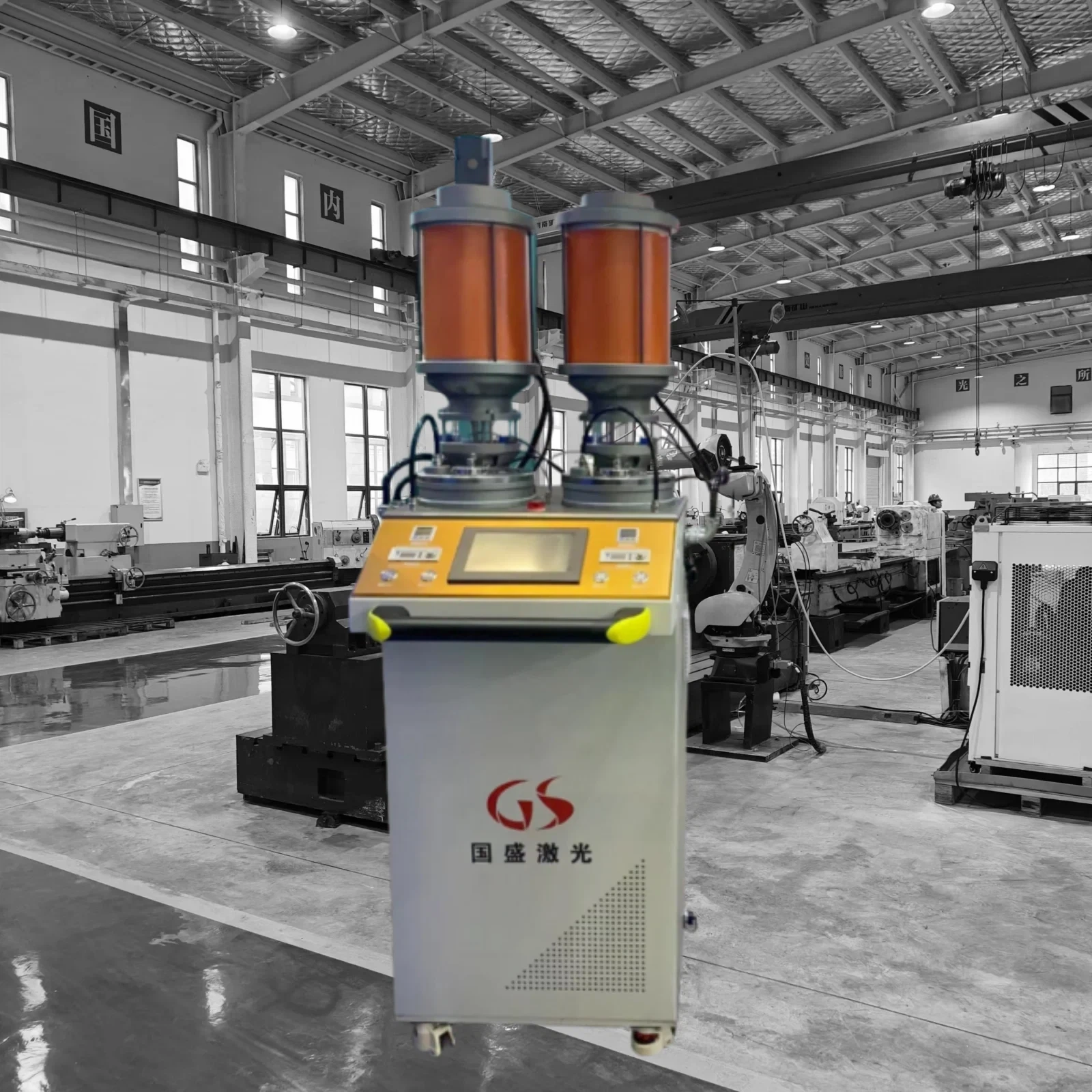
Powder Feeder

Laser Hardening Head
A Pillar of Precision Fabrication
Laser welding remains an essential, evolving technology for precision fabrication. Its unique benefits of minimal heat input, high speed, and exceptional control make it unrivaled for applications demanding the highest quality. For manufacturers investing in laser additive manufacturing equipment, understanding and leveraging complementary laser welding capabilities is key to offering a complete production solution. As advancements in laser technology and digital process control continue, laser welding will solidify its role as a fundamental pillar in the intelligent, flexible, and high-value manufacturing landscape of the future.
FAQ
Q: What are the main types of lasers used in industrial welding?
A: The most common industrial welding lasers are fiber lasers, known for high efficiency and beam quality, and, to a lesser extent, CO2 lasers. Fiber laser welding systems are preferred for metals like stainless steel, aluminum, and titanium alloys due to their precision, reliability, and lower operating costs, making them integral to modern laser additive manufacturing and fabrication.
Q: How is laser welding used in aerospace component manufacturing?
A: In aerospace, laser welding is critical for joining thin, heat-sensitive materials like titanium alloys and superalloys used in engine and structural parts. Its low heat input prevents distortion, creating high-strength, lightweight welds essential for the performance and safety of aerospace components. It is often integrated into automated robotic welding cells for consistent, high-quality production.
Q: Can laser welding be integrated with metal 3D printing?
A: Absolutely. Laser welding is highly compatible with laser additive manufacturing. Many additive manufacturing systems use a similar fiber laser source. Laser welding is used to assemble larger 3D-printed parts, add features, or perform repairs. This integration enables the creation of complex, multi-part structures that leverage the strengths of both powder bed fusion and precision joining.