

Introduction to Advanced Pump Cavity Restoration
In industrial maintenance and repair operations, the degradation of cast pump cavities poses significant challenges to equipment longevity and operational efficiency. Laser cladding technology has emerged as a leading surface engineering solution for restoring these critical components. This advanced laser additive manufacturing process offers a superior alternative to traditional repair methods, enabling precise reconstruction of worn or damaged pump interiors. By utilizing high-power laser systems and specialized metal powders, technicians can achieve metallurgically bonded coatings that restore original dimensions while enhancing surface properties. This comprehensive guide explores the complete laser cladding repair workflow for cast pump cavities, covering essential preparation steps, material selection criteria, performance characteristics, and real-world industrial applications across various sectors.

Pre-Processing Preparation for Optimal Laser Cladding Results
Successful laser cladding repair begins with meticulous surface preparation of the cast pump cavity. The initial step involves thorough cleaning using industrial degreasers and abrasive techniques to remove all contaminants, including oils, grease, rust, and existing coatings. This ensures proper adhesion between the substrate and clad material. Following cleaning, precise preheating becomes critical to minimize thermal stress and prevent cracking during the deposition process. Industrial preheating systems gradually raise the component temperature to approximately 200°C, creating optimal conditions for laser-material interaction. The preparation phase concludes with non-destructive testing to identify any subsurface defects that might affect the repair quality. This comprehensive preparation protocol establishes the foundation for successful laser cladding application, ensuring the pump cavity meets all geometrical and metallurgical requirements for returned service.
Material Selection Strategy for Pump Cavity Applications
Choosing appropriate cladding materials represents a critical decision point in pump cavity restoration projects. Nickel-based alloys dominate applications requiring exceptional corrosion resistance in chemical processing environments, while cobalt-based alloys excel in high-temperature scenarios with combined wear and corrosion challenges. Iron-based alloys provide cost-effective solutions for abrasive wear conditions without significant chemical exposure. Beyond base composition, powder characteristics including particle size distribution, flowability, and spherical morphology significantly impact deposition efficiency and final coating quality. The selection process must consider the pump's specific operational parameters: fluid media being handled, operating temperatures, pressure conditions, and any abrasive particulate content. This systematic approach to material selection ensures the laser-clad coating delivers optimal performance throughout the pump's service life.


Laser Cladding Equipment and Process Parameters
Modern laser cladding systems for pump cavity repair integrate several advanced components to ensure precise, repeatable results. High-power fiber lasers typically ranging from 2-6 kW provide the energy source, while precision powder feed systems deliver consistent material flow to the deposition head. Robotic manipulation systems enable complex internal geometry coverage, often incorporating vision systems for real-time process monitoring. Critical laser cladding parameters including laser power (typically 1.5-3.5 kW), traverse speed (5-20 mm/s), powder feed rate (15-40 g/min), and overlap ratio (30-50%) must be optimized for each specific pump cavity geometry and material combination. Advanced systems incorporate closed-loop control using pyrometers and cameras to maintain consistent melt pool characteristics throughout the deposition process. This integrated equipment approach enables restoration of pump cavities to original specifications with enhanced surface properties.
Performance Characteristics and Quality Validation
Laser-clad coatings on pump cavities exhibit superior mechanical and metallurgical properties compared to the original cast surfaces. The rapid solidification characteristics create fine, homogeneous microstructures with hardness values typically ranging from 45-65 HRC, significantly enhancing abrasion resistance. Metallurgical bonding strengths exceed 350 MPa, eliminating delamination risks under operational stresses. Post-cladding quality validation incorporates dimensional verification using laser scanning, followed by non-destructive examination including dye penetrant and ultrasonic testing to confirm coating integrity. Final surface finishing through grinding or honing achieves the required surface roughness (typically Ra 0.4-1.6 μm) for optimal hydraulic efficiency. The completed restoration demonstrates performance characteristics that often surpass original equipment specifications, providing extended service life under demanding operational conditions across various industrial applications.

Laser equipment components

Fiber Laser Machine

Laser Cladding Head
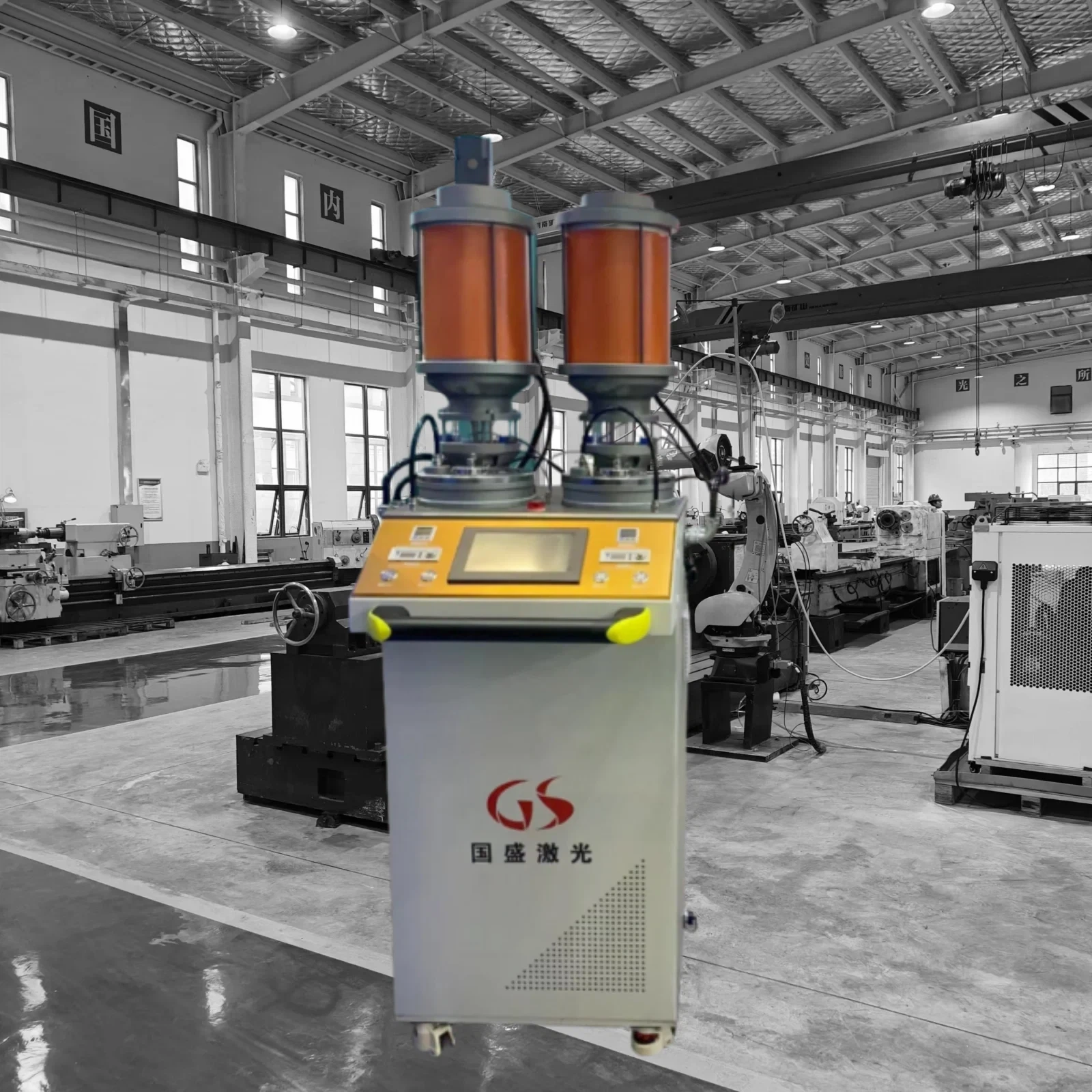
Powder Feeder

Laser Hardening Head
Industrial Applications and Implementation Benefits
Laser cladding repair technology finds extensive application across multiple industries dealing with pump cavity degradation. In oil and gas operations, centrifugal pump volutes handling abrasive fluids see life extensions of 300-500% following laser cladding with tungsten carbide composites. Chemical processing facilities utilize nickel-based alloy cladding to combat corrosive deterioration in acid-handling pumps. Marine applications benefit from cobalt-based alloy deposits on seawater pump components subjected to erosion-corrosion conditions. The technology demonstrates particular value for high-cost pump assemblies where replacement would involve significant expenditure and extended downtime. Beyond repair applications, laser cladding enables component enhancement through the application of superior alloys not feasible in original casting processes. This versatile technology delivers substantial economic advantages through reduced maintenance costs, extended component lifecycles, and minimized production interruptions across industrial sectors.
FAQ
Q: What is laser cladding repair for pump cavities?
A: Laser cladding repair is an advanced manufacturing process that uses laser energy to fuse premium metal powders onto damaged pump interior surfaces, restoring dimensions while improving wear and corrosion resistance beyond original specifications.
Q: How does laser cladding improve pump performance?
A: The process creates metallurgically bonded coatings with superior hardness and chemical resistance, significantly extending service life in abrasive or corrosive applications while maintaining optimal hydraulic efficiency through precise dimensional restoration.
Q: What materials are used in pump cavity laser cladding?
A: Common materials include nickel-based alloys for corrosion resistance, cobalt-based alloys for high-temperature wear applications, and iron-based alloys for cost-effective abrasion protection, with selection based on specific operational requirements and fluid media.