

The Core Key to Advancing Advanced Manufacturing
Amid the rapid iteration of additive manufacturing technologies, Laser Metal Deposition (LMD) has emerged as a core supporting technology in high-end fields such as aerospace and automotive manufacturing, thanks to its advantages of precise deposition and customized forming. However, the quality and efficiency of the LMD process are highly dependent on parameter matching, with defects such as porosity and cracks mostly stemming from parameter imbalance. This article focuses on the core logic of LMD process parameter optimization, dissects key influencing factors, optimization paths, and industry value, providing systematic technical insights and application references for industry practitioners.

Underlying Value and Key Variables of Parameter Optimization
The core value of LMD process parameter optimization lies in balancing quality, efficiency, and cost. Its essence is to achieve precise control of cladding layer performance by regulating key variables. Core variables include laser power, scanning speed, powder feeding rate, layer thickness, and substrate preheating temperature-each directly affecting the mechanical properties, surface precision, and metallurgical integrity of the cladding layer. For instance, laser power determines heat input, while scanning speed is correlated with production efficiency and thermal deformation. Parameter imbalance can easily lead to issues such as residual stress and excessive porosity. In high-end manufacturing scenarios, parameter optimization can increase the qualified rate of cladding parts by over 30% while reducing material waste by 15%-20%, serving as a prerequisite for the large-scale application of LMD technology.
Influence Mechanism and Regulation Logic of Four Core Parameters
Laser power, scanning speed, powder feeding rate, and layer thickness constitute the core regulation system of the LMD process, and their interaction determines the cladding effect. Laser power must match material characteristics-excessively high power may cause thermal deformation, while insufficient power results in weak bonding strength. Scanning speed is negatively correlated with heat input, requiring a balance between efficiency and molten pool stability. Powder feeding rate directly affects deposition efficiency and must be matched with laser energy to avoid unmelted or accumulated powder. Layer thickness selection needs to balance precision and cycle time: thin layers are suitable for precision forming, while thick layers improve efficiency but require strict stress control. In practical regulation, a multi-parameter collaborative regulation model should be established based on substrate materials (e.g., titanium alloy, stainless steel) and workpiece requirements to achieve optimal performance.


Data-Driven: An Efficient Path for LMD Parameter Optimization
The traditional trial-and-error optimization method has a long cycle and high cost, and data-driven technology has become the mainstream direction of LMD parameter optimization. Its core paths include three dimensions: first, Design of Experiments (DoE), which systematically screens parameter combinations through statistical methods to accurately locate key influencing factors; second, in-situ monitoring, which uses sensors to real-time capture data such as melt pool temperature and dynamics to realize real-time parameter correction; third, simulation, which uses Finite Element Analysis (FEA) and Computational Fluid Dynamics (CFD) to predict thermal stress and material flow, optimizing parameters in advance. Data-driven can shorten the optimization cycle by more than 40% and significantly reduce test costs.
Optimization Empowers Core Industry Application Scenarios of LMD
Parameter optimization enables LMD technology to achieve value upgrading in diverse industry scenarios. In the aerospace field, optimized parameters can realize precise repair of core components such as engine blades, extending service life and reducing downtime losses; in automotive manufacturing, parameter regulation achieves rapid prototyping of customized parts, improving R&D and production efficiency. In the oil and gas industry, the optimized LMD process can prepare corrosion-resistant and wear-resistant functionally graded material components to adapt to harsh working conditions; in addition, in scenarios such as high-end equipment maintenance and personalized medical device manufacturing, parameter optimization is the key to ensuring product performance.

Laser equipment components

Fiber Laser Machine

Laser Cladding Head
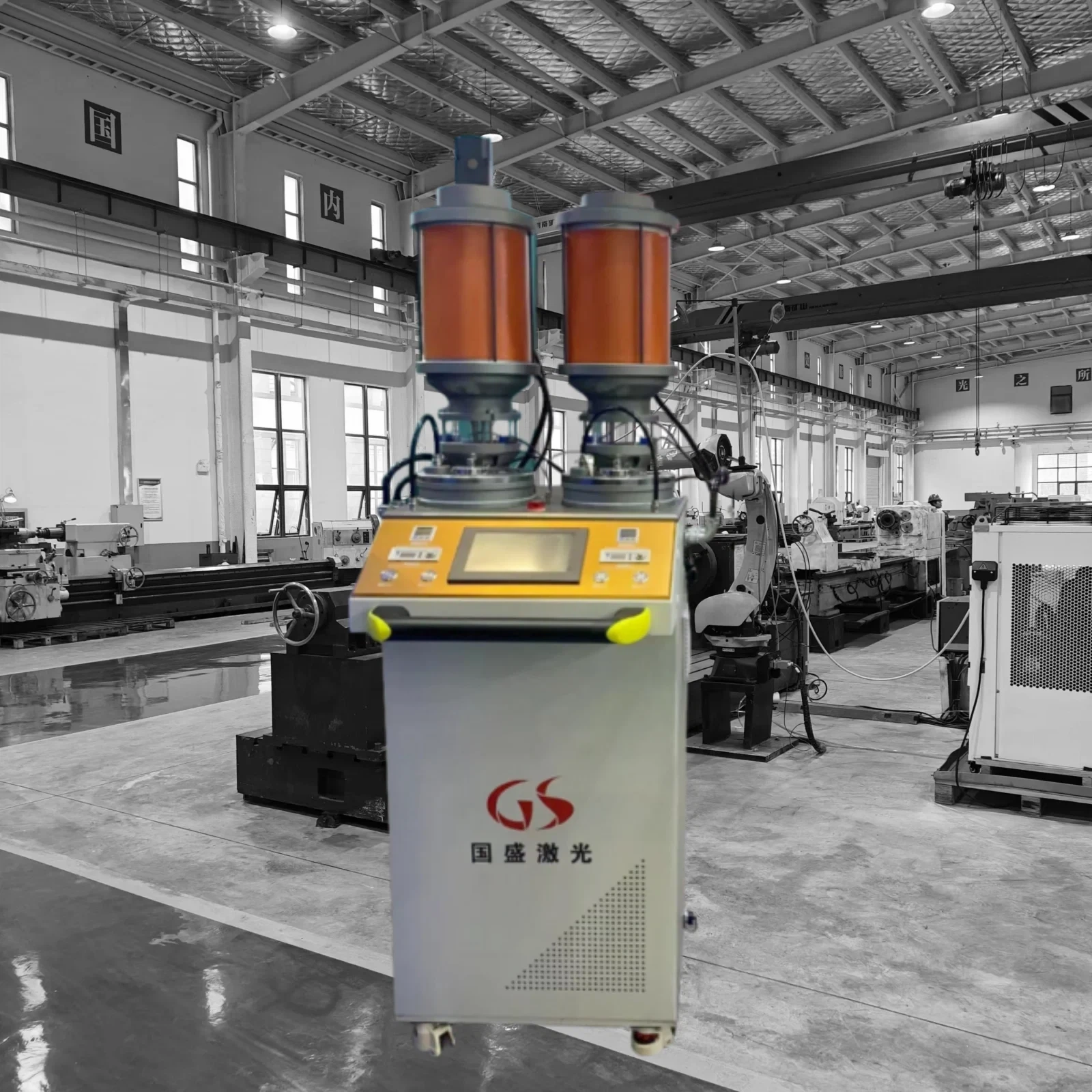
Powder Feeder

Laser Hardening Head
Parameter Optimization Leads LMD Technology Iteration and Industrial Upgrading
Laser Metal Deposition (LMD) process parameter optimization is the core key to unlocking technical potential. Through multi-variable precise regulation and data-driven empowerment, it achieves the coordinated optimization of quality, efficiency, and cost. From the influence mechanism of core parameters to the value implementation of industry scenarios, parameter optimization runs through the entire process of LMD technology application. In the future, with the integration of machine learning and adaptive control technologies, parameter optimization will become more intelligent, further promoting the penetration of LMD in the high-end manufacturing field. For the industry, deepening the research on parameter optimization technology is a key measure to enhance core competitiveness and seize the development opportunities of advanced manufacturing.