

Precision Fusion Driven by High-Energy Pulses
Laser welding technology is one of the core processes in the field of modern materials processing. It utilizes a high-energy density laser beam as a heat source to quickly and locally heat the material, causing it to melt and form a molten pool with a specific geometry, thereby achieving material joining. Evolving from early heat conduction welding (primarily used for thin-walled materials), and with the advent of high-power $\text{CO}_2$ and $\text{YAG}$ lasers, laser welding has entered the era of deep penetration welding based on the "keyhole effect." Deep penetration welding has significantly increased both the weld depth and speed, extending its application range from precise joining of micro parts to heavy industries like machinery, automotive, and aerospace, where high strength and efficiency are paramount. Laser welding machines are classified into manual, automatic, spot welding, and fiber-delivered types, possessing characteristics such as non-contact and high precision, making it a key technology for driving modern manufacturing towards higher quality and efficiency.

Core Advantages Analysis: High Efficiency, Low Deformation, and Material Versatility
Laser welding stands out among various welding technologies due to its series of unique core advantages. First, it achieves a perfect combination of high speed, large penetration depth, and minimal deformation, which is crucial for manufacturing heat-sensitive and high-precision components. Its extremely high power density (in the $\text{W}/\text{cm}^2$ range) ensures the heat energy is highly concentrated, effectively reducing the heat-affected zone (HAZ). Second, laser welding demonstrates excellent material applicability; it can efficiently process materials traditionally difficult to melt, such as titanium and quartz, and can achieve high-quality joining between dissimilar metals. Furthermore, the laser's controllability is exceptional, allowing the beam to be focused down to very small spots for micro-welding and positioning with micrometer accuracy, perfectly meeting the demands of high-volume automated production of micro parts. Combined with fiber delivery technology, the laser beam can flexibly reach difficult areas and enable multi-beam, multi-station simultaneous processing, significantly enhancing production flexibility and efficiency.
Deep Penetration Welding Principle: Energy Conversion and Weld Formation via the Keyhole Effect
Laser deep penetration welding is the core technology of high-power laser welding, based on the unique "keyhole effect." When the laser power density is sufficiently high, the material instantaneously vaporizes, forming a keyhole filled with high-temperature vapor. This keyhole structure acts like a black body, efficiently absorbing almost all incident laser energy. The temperature inside the cavity can reach approximately $25,000\ ^\circ\text{C}$, significantly boosting energy utilization. Heat transfers from the keyhole wall to the surroundings, melting the surrounding metal. During welding, the surface tension of the keyhole wall and the flow of the external liquid metal maintain a dynamic equilibrium with the pressure of the internal vapor, ensuring the stability of the keyhole structure. As the laser beam moves forward, the keyhole and the surrounding molten pool move with it, and the molten metal rapidly solidifies behind the keyhole, forming a deep penetration weld with a high depth-to-width ratio and high density. This mechanism is key to achieving minimal heat input and minimal thermal deformation, ensuring high-strength and low-defect weld quality.


Process Parameters and Precise Control: Key Variables for Achieving Weld Quality
The successful execution of laser welding is highly dependent on the precise control of process parameters, which directly influence the geometry of the molten pool and the final weld quality. Among these, power density is the critical parameter determining the welding mode (conduction or deep penetration) and must be selected within an appropriate range for the application. The laser pulse waveform significantly affects the change in metal reflectivity during the welding process, particularly in thin sheet welding, where the waveform needs to be optimized to improve energy coupling efficiency. Furthermore, focusing distance (defocus) is another important control variable. Some degree of defocus is typically required to avoid excessive vaporization. In practice, negative defocus (focus below the workpiece) is often used to achieve greater penetration depth, as it allows the light energy to penetrate deeper into the material more effectively; conversely, positive defocus (focus above the workpiece) is preferred for welding thin materials. The precise adjustment of these laser welding parameters is the prerequisite for guaranteeing high precision and stable weld quality, and is key to addressing the challenges of welding high-reflectivity materials.
Laser Soft/Hard Soldering and Process Methods: Versatile Joining Capabilities
In addition to fusion welding, the laser can also be used as an efficient heat source for soft soldering and hard soldering, with prominent advantages in electronics and precision component joining. Laser soft soldering is primarily used for joining printed circuit boards, and its greatest advantage is localized heating. Because the heat is highly concentrated, the heat-affected zone is minimal, components are less susceptible to thermal damage, and soldering can even be performed near heat-sensitive components. The non-contact heating and ease of beam splitting of laser soft soldering allow optical components (like semi-transparent mirrors) to be used for simultaneous, symmetrical, and precise soldering at multiple points, significantly improving automation and yield. At the same time, laser welding employs various process methods to suit different joining structures, including butt welding and lap welding between sheets, cross welding and T-joint welding between wires, and joining dissimilar metals. This versatility and process flexibility make laser technology the preferred solution for meeting complex component joining requirements.

Laser equipment components

Fiber Laser Machine

Laser Cladding Head
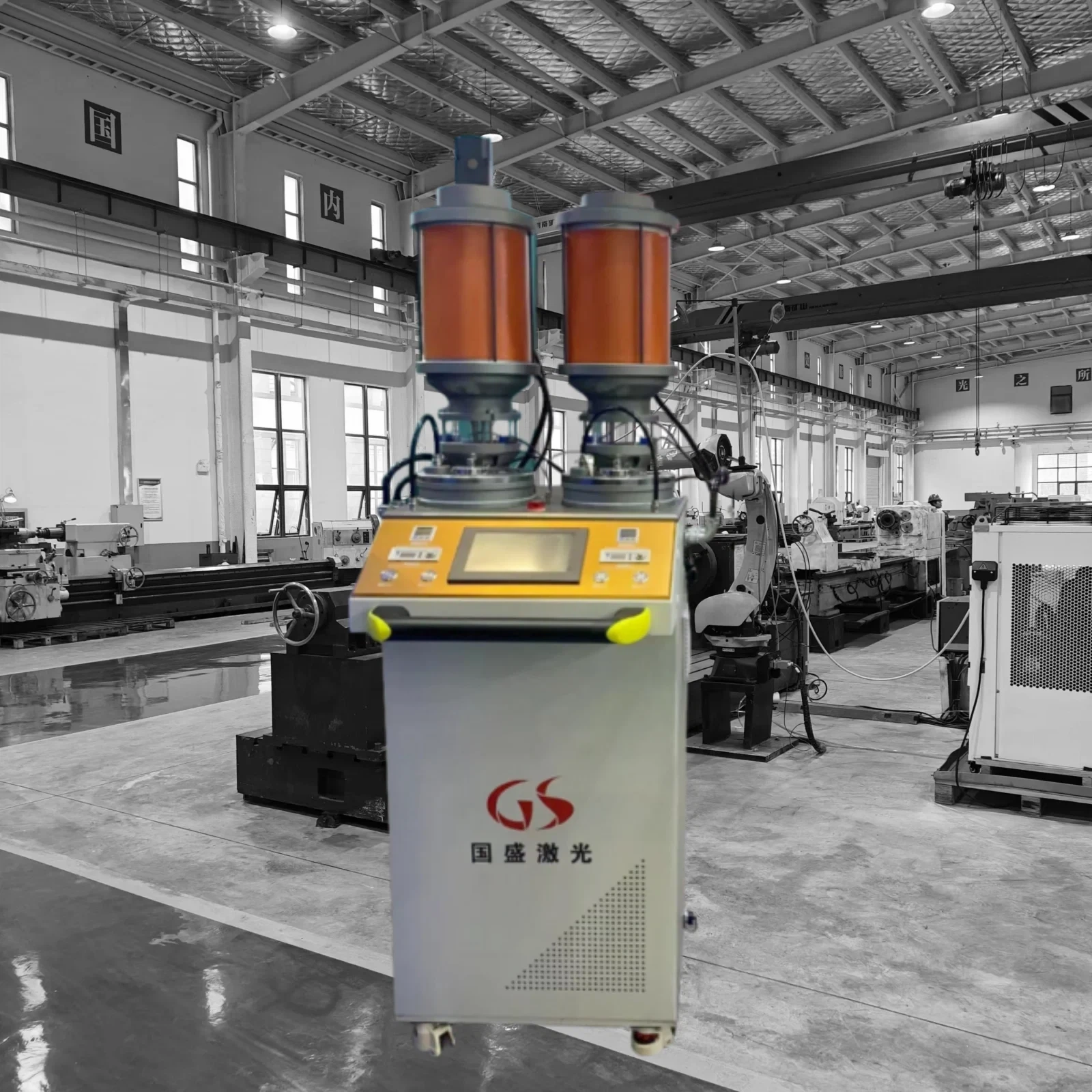
Powder Feeder

Laser Hardening Head
Precision Manufacturing Direction under High-Cost Challenges
Laser welding technology, with its high precision, high speed, low heat input, and superior material adaptability, has become the core driver for the development of modern precision manufacturing. The "keyhole effect" mechanism of deep penetration welding is critical for achieving large penetration depth and high-density welds. Its application potential is vast, ranging from structural joining in the automotive industry to micrometer-level welding in medical electronics. Although the high cost of laser welding machines and systems, and the stringent requirement for workpiece assembly precision, are its primary limitations, these challenges are gradually being overcome with the advancement of fiber transmission technology and increased equipment integration. In the future, laser welding will be more tightly integrated with automation and digitalization, further improving processing efficiency and quality. It will undoubtedly continue to play an irreplaceable role in the manufacturing of high-value, high-reliability products, leading the future direction of welding technology.