

Laser Cladding – A Revolution in High-Precision Surface Engineering
In the pursuit of ultimate performance within the aerospace sector, laser cladding has emerged as a core technology for producing high-quality, precision components. This process utilizes a high-energy laser as a heat source to deposit specific materials onto a substrate, creating a surface layer with superior physical properties. The laser cladding head, acting as the "brain" of this process, is responsible for precisely directing the laser beam while simultaneously delivering powder or wire. This technology not only creates lightweight and durable aerospace parts but also significantly reduces material waste. As the industry's demand for fuel efficiency and structural integrity grows, laser cladding is becoming a key engine for transformation, thanks to its ability to handle complex geometries and dissimilar material bonding.

Core Component: Insights into the Precision Control of Cladding Heads
The laser cladding head is the most critical execution component of the entire process. It is far more than just a beam-guiding tool; it is a sophisticated terminal that integrates precision optical systems with material delivery mechanisms. The head can adjust spot size and energy distribution based on the physical properties of various materials, such as titanium or nickel-based alloys, ensuring extreme deposition accuracy. Working in tandem with automated powder or wire feeders, the head achieves material stacking on the substrate with almost zero porosity. This highly controlled deposition results in parts with microstructures far superior to traditional casting, effectively eliminating internal defects and ensuring structural integrity in extreme flight environments.
Industry Needs: Meeting the Challenges of Extreme Aerospace Environments
The aerospace industry places almost harsh requirements on components: they must be extremely lightweight to improve fuel efficiency while possessing ultra-high durability to withstand high-pressure and high-stress environments. Laser cladding heads address these pain points precisely. They support the local deposition of expensive specialty metals (like titanium) onto lighter substrates (like aluminum), achieving "localized strengthening" to maximize weight reduction without sacrificing strength. Furthermore, aerospace manufacturing requires high repeatability; the micrometer-level control of the cladding head reduces variability. By forming parts to near-net shapes, it also significantly reduces post-processing work like machining, shortening lead times and production costs.


Application Examples: From Turbine Blade Repair to 3D Printing Reinforcement
Laser cladding heads are used extensively in aviation. A primary application is the repair of turbine blades; these critical engine parts are prone to wear, and laser cladding can precisely add material to damaged areas to restore their original geometry. Another key use is the coating of landing gear components, allowing them to resist impact and corrosion in harsh environments, thereby reducing maintenance frequency. Additionally, the technology is used to produce complex fuel nozzles and heat exchangers. One of the most cutting-edge applications is combining it with 3D printing (additive manufacturing), where laser cladding is used to add strength to specific stress-bearing sections of a printed part, offering limitless possibilities for high-complexity components.
Future Outlook: Integration of Automation, Composites, and Smart Manufacturing
The future of laser cladding in aerospace looks exceptionally promising. R&D is moving toward new material expansion, with potential applications for composites and ceramics on the horizon. As Artificial Intelligence and robotics become more integrated, laser cladding heads will gain greater self-adaptive capabilities for fully automated repair of complex paths. Furthermore, the deep coupling of laser cladding with additive manufacturing will revolutionize the aerospace supply chain, drastically reducing inventory pressure and logistics costs. This efficient, low-carbon, and intelligent manufacturing model will continue to push aerospace technology toward deeper space exploration and serve as the core process guarantee for next-generation aircraft.

Laser equipment components

Fiber Laser Machine

Laser Cladding Head
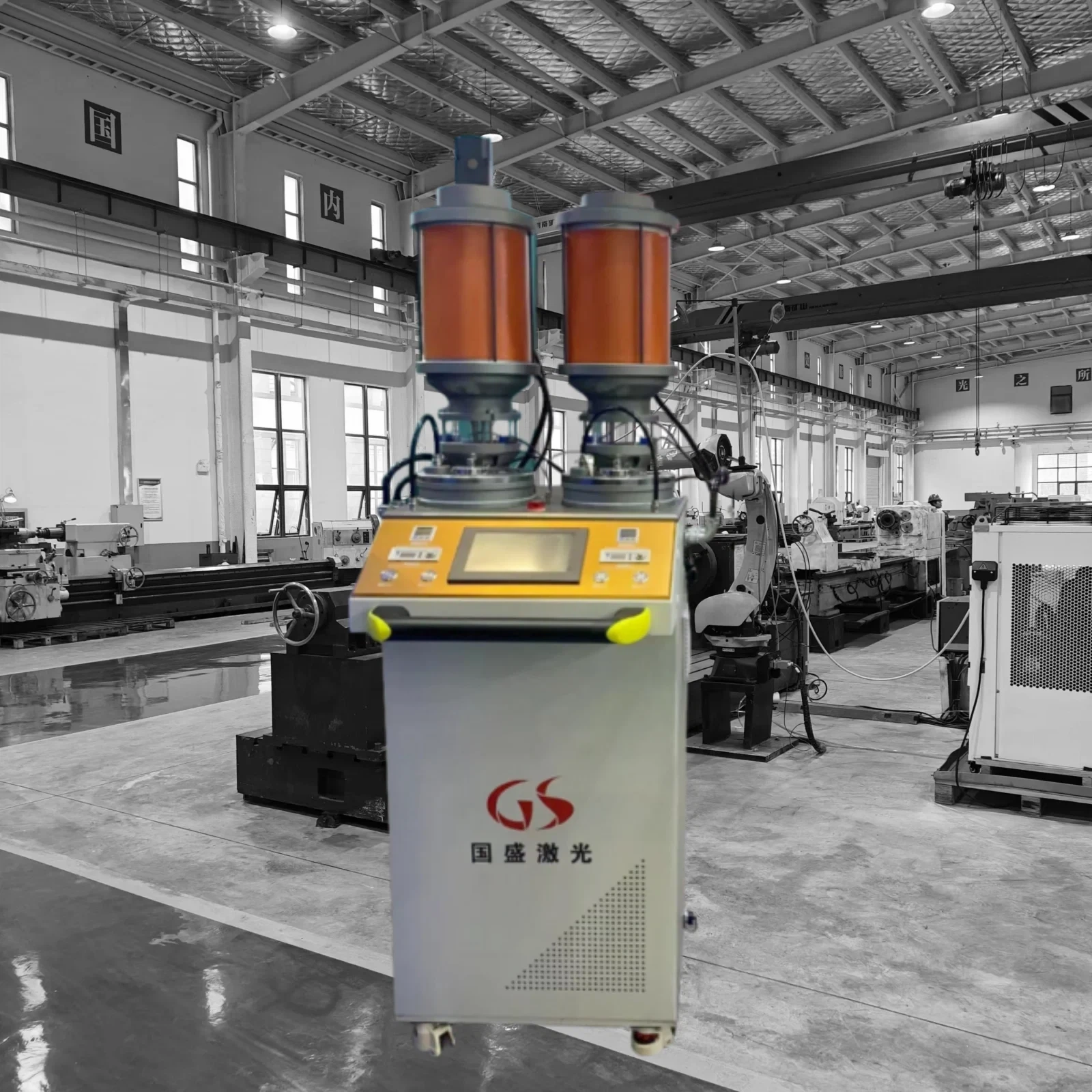
Powder Feeder

Laser Hardening Head
Defining High Standards for Future Aircraft Manufacturing
In summary, the laser cladding head is not just a tool but a core asset for enhancing aerospace industry competitiveness. By achieving high-precision, low-loss material deposition, it resolves the conflict between lightweight design, high strength, and low cost. From the life-extending repair of core engine parts to the direct manufacturing of complex precision components, laser cladding technology demonstrates irreplaceable superiority. As the process continues to iterate and automation levels rise, it will further shorten R&D cycles and help safer, greener aircraft take to the skies. The laser cladding head, with its light of precision, is illuminating the future path of aerospace smart manufacturing.