

Introduction to SLS Technology
Selective Laser Sintering (SLS) stands as a pivotal laser additive manufacturing technology, revolutionizing how industries approach prototyping and production. As a leading powder bed fusion process, SLS distinguishes itself by building high-precision, robust components directly from digital models, eliminating the need for traditional tooling. This technology transcends basic prototyping, enabling the direct digital manufacturing of end-use parts, facilitating small-batch production runs, and delivering functional hand plates or samples with exceptional speed. For engineers and product developers seeking agile manufacturing solutions, SLS offers unparalleled freedom in complex geometry design combined with the material performance required for demanding applications. The ability to transition seamlessly from concept to final product makes it an indispensable asset in modern industrial fabrication, supporting sectors from aerospace to automotive with its versatile and efficient workflow.

Core Principles of the SLS Process
The operational framework of SLS is a meticulously orchestrated cycle of powder handling and laser energy application, central to all laser sintering machines. The process initiates within a build chamber housing a powder supply bin and a build platform. A precision powder-laying mechanism, typically a roller, spreads a thin, uniform layer of polymer powder-often between 0.06mm and 0.1mm thick-across the build area. A high-power CO2 or fiber laser beam then selectively scans the cross-section of the part, as defined by sliced CAD data. The laser's thermal energy fuses the powder particles at a molecular level, sintering them to form a solid layer. Crucially, the surrounding unsintered powder remains in place, providing natural support for overhanging features and eliminating the need for dedicated support structures. This layer-by-layer fusion continues until the complete 3D part is embedded within the powder bed, ready for post-processing.
Material Versatility for Functional Components
Material selection is a cornerstone of SLS's capability for producing durable end-use parts and functional prototypes. While nylon-based powders, such as PA12 and PA11, form the industry standard due to their excellent mechanical strength, fatigue resistance, and good chemical stability, the material portfolio is extensive. Engineering-grade composites, including glass-filled or aluminum-filled nylons, are widely used to enhance stiffness, thermal properties, and dimensional stability for more demanding industrial workpieces. Furthermore, advancements in material science have introduced elastomeric powders and specialized polymers resistant to high temperatures or flames, broadening the application scope. This diversity in thermoplastic powders allows manufacturers to tailor material properties-from flexibility to rigidity-to meet specific performance criteria for final part production across various sectors.


Key Advantages for Industrial Applications
The strategic benefits of SLS laser sintering make it a preferred choice for direct manufacturing and low-volume production. Its most significant advantage is geometric freedom, allowing the creation of intricate internal channels, lightweight lattice structures, and complex assemblies consolidated into single components-designs often impossible with conventional machining. Secondly, as a support-free process, it reduces post-processing labor and material waste, while enabling more efficient nesting of multiple parts within the build volume to maximize productivity. The resulting components are inherently isotropic and exhibit excellent mechanical properties, making them suitable for functional testing and direct integration into end products. These advantages translate into reduced time-to-market, lower costs for small series production, and the ability to manufacture on-demand, custom industrial parts without minimum order quantities.
From Prototyping to Final Part Production
The application landscape for SLS has dramatically expanded from simple visual models to critical end-use components. In aerospace and automotive, it manufactures durable ducts, brackets, and housings that withstand operational environments. The medical field utilizes it for producing custom surgical guides and sterilizable devices. A rapidly growing application is in custom manufacturing and spare part production, where businesses use industrial SLS printers to fabricate legacy parts or limited-series components cost-effectively. Furthermore, for product development teams, SLS serves as an ideal technology for creating high-fidelity hand plate samples for ergonomic testing and market validation. This transition from prototyping tool to a viable production technology underscores its reliability and material performance in creating final workpieces.

Laser equipment components

Fiber Laser Machine

Laser Cladding Head
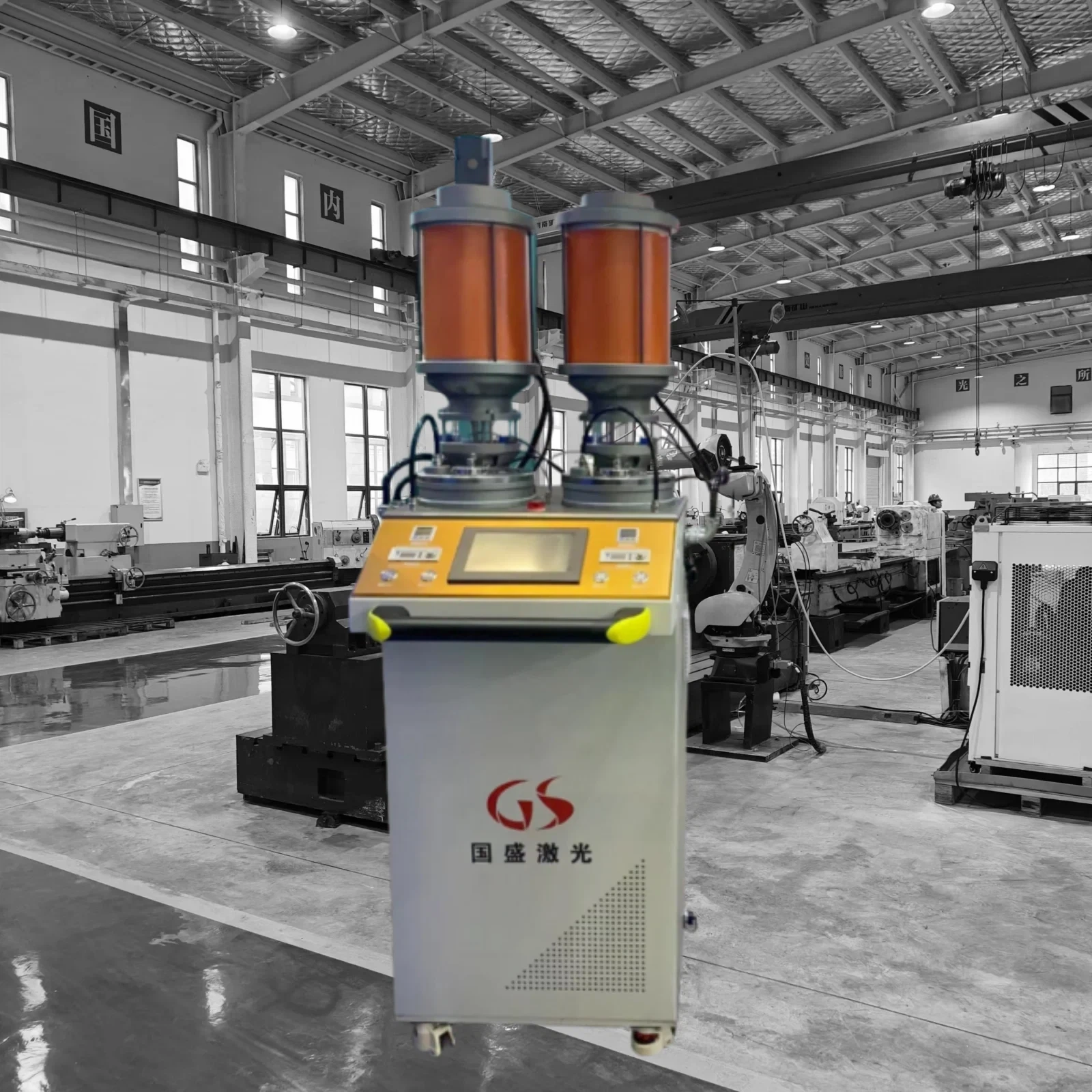
Powder Feeder

Laser Hardening Head
Embracing Agile Digital Manufacturing
In conclusion, Selective Laser Sintering represents a mature and powerful facet of laser additive manufacturing that directly addresses the needs of modern, agile production. By seamlessly merging complex design capabilities with the production of durable, end-use quality parts from engineering-grade materials, SLS provides a compelling alternative to traditional manufacturing for prototypes, tools, and final components. As material options continue to evolve and laser sintering machine efficiency improves, adopting SLS technology is a strategic move for any enterprise aiming to innovate faster, streamline supply chains, and unlock new possibilities in product design and direct digital manufacturing.
FAQ
Q: What is Selective Laser Sintering (SLS) best used for?
A: SLS is best used for creating high-precision, durable functional prototypes and end-use parts directly from 3D CAD data. It excels in small-batch production, manufacturing complex geometries, and producing industrial components that require good mechanical strength without the need for tooling.
Q: What materials can be used in SLS 3D printing?
A: The most common materials are thermoplastic powders like nylon (PA12, PA11) and their composites (e.g., glass-filled or aluminum-filled). These materials are chosen for laser additive manufacturing to produce strong, heat-resistant, and durable workpieces suitable for direct application.
Q: Does SLS require support structures during printing?
A: No, one key advantage of the SLS process is that it does not require dedicated support structures. The unsintered powder surrounding the part during the powder bed fusion process acts as natural support, reducing post-processing time and material waste.